
Private Endpoints: Bring Your Fine-Tuned Models and Capacity to OpenRouter

Private Endpoints AI: A Comprehensive Deep Dive for Enterprise Developers
Private endpoints AI has moved from a niche compliance requirement to a core architectural decision for enterprises running production workloads. Instead of sending prompts and proprietary data over the public internet to a shared model API, private endpoints AI gives you dedicated, network-isolated inference paths that live inside your own VPC or connect through private peering. For teams building on fine-tuned models, multimodal pipelines, or regulated data, this distinction affects security, latency, cost predictability, and long-term vendor strategy. This deep dive covers the technical foundations, deployment models, gateway architecture, capacity planning, and real-world lessons you need to evaluate private endpoints AI and alternatives like CCAPI’s unified multimodal AI API gateway.
1. Private Endpoints AI: Core Concepts and Market Context
1.1 What Are Private Endpoints in AI Infrastructure?
A private endpoint in AI infrastructure is a dedicated network interface that connects your cloud environment to a model inference service without traversing the public internet. In practice, this often means VPC peering, AWS PrivateLink, Azure Private Link, or Google Cloud Private Service Connect. The model endpoint receives requests over private IP addresses, and data isolation is enforced at the network layer rather than only at the application layer.
Technically, a private endpoint is not just a firewall rule. It is a routable, identity-aware path between your workload and the inference runtime. That path can terminate at a managed service, a self-hosted inference server like vLLM or NVIDIA Triton, or a gateway that abstracts multiple providers. The key properties are dedicated capacity, controlled ingress and egress, and often a private DNS namespace. Public model APIs, by contrast, are multi-tenant HTTP endpoints reachable from anywhere.
1.2 How Private Endpoints Differ from Public Inference APIs

The differences go beyond security. Public inference APIs are excellent for prototyping, low-volume workloads, and accessing frontier models without infrastructure overhead. Private endpoints become necessary when data residency, auditability, throughput guarantees, or fine-tuned model hosting cannot be satisfied by a shared endpoint. The table below summarizes the trade-offs.
| Dimension | Public Inference API | Private Endpoint AI |
|---|---|---|
| Security | TLS + API key, shared tenancy | Private networking, VPC isolation, mTLS options |
| Latency | Variable, internet-dependent | Predictable, often sub-50ms network overhead |
| Compliance | Provider-dependent | Supports data residency and audit controls |
| Rate limits | Shared, bursty | Reserved throughput or dedicated concurrency |
| Cost predictability | Pay-per-token, variable | Reserved capacity plus overage |
| Control | Limited routing and versioning | Full control over model versions and rollout |
In practice, public APIs are sufficient for internal tools, non-sensitive summarization, and early-stage products. Private endpoints become mandatory when you process PII, handle regulated financial or healthcare data, or need stable p95 latency for customer-facing features. A common mistake is assuming that a private endpoint automatically solves governance; it does not. You still need authentication, audit logging, and quota enforcement.
1.3 Why Enterprises Are Moving Toward Bring Your Own Model Gateway

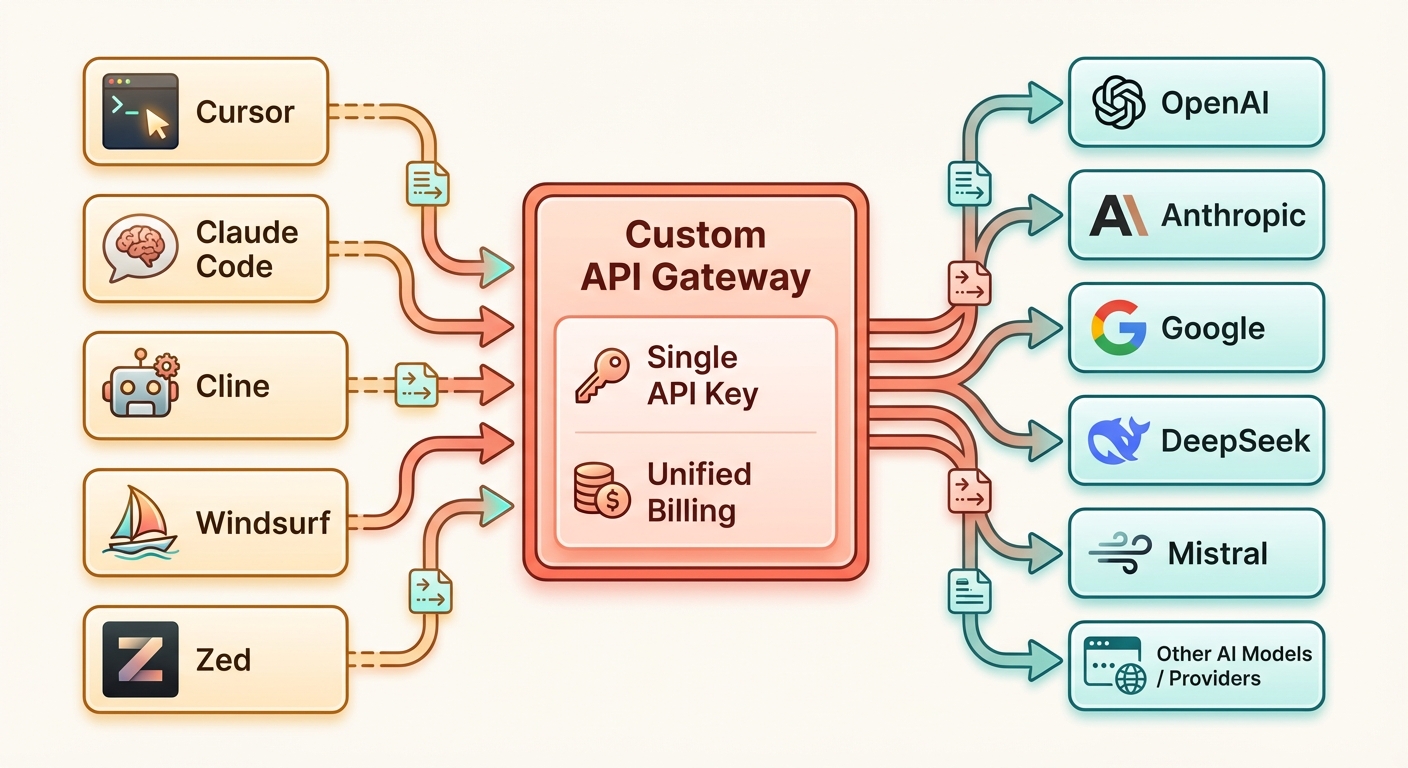
Enterprises are increasingly adopting a bring your own model gateway pattern to avoid hard-coding provider-specific APIs into every application. The gateway becomes the control plane for model portability, multi-provider routing, and zero vendor lock-in. Instead of rewriting integrations when you switch from one model to another, you change a routing policy.
CCAPI is a unified multimodal AI API gateway that provides access to major models from OpenAI, Anthropic, and Google. It also supports image generation API, video generation API, and text to video workloads, which means teams can manage text, image, audio, and video generation through one integration surface. CCAPI’s transparent pricing and zero vendor lock-in make it relevant for enterprises that want to compare private endpoint costs without committing to a single provider’s billing model.
1.4 Key Comparison Criteria: Security, Latency, Cost, and Control
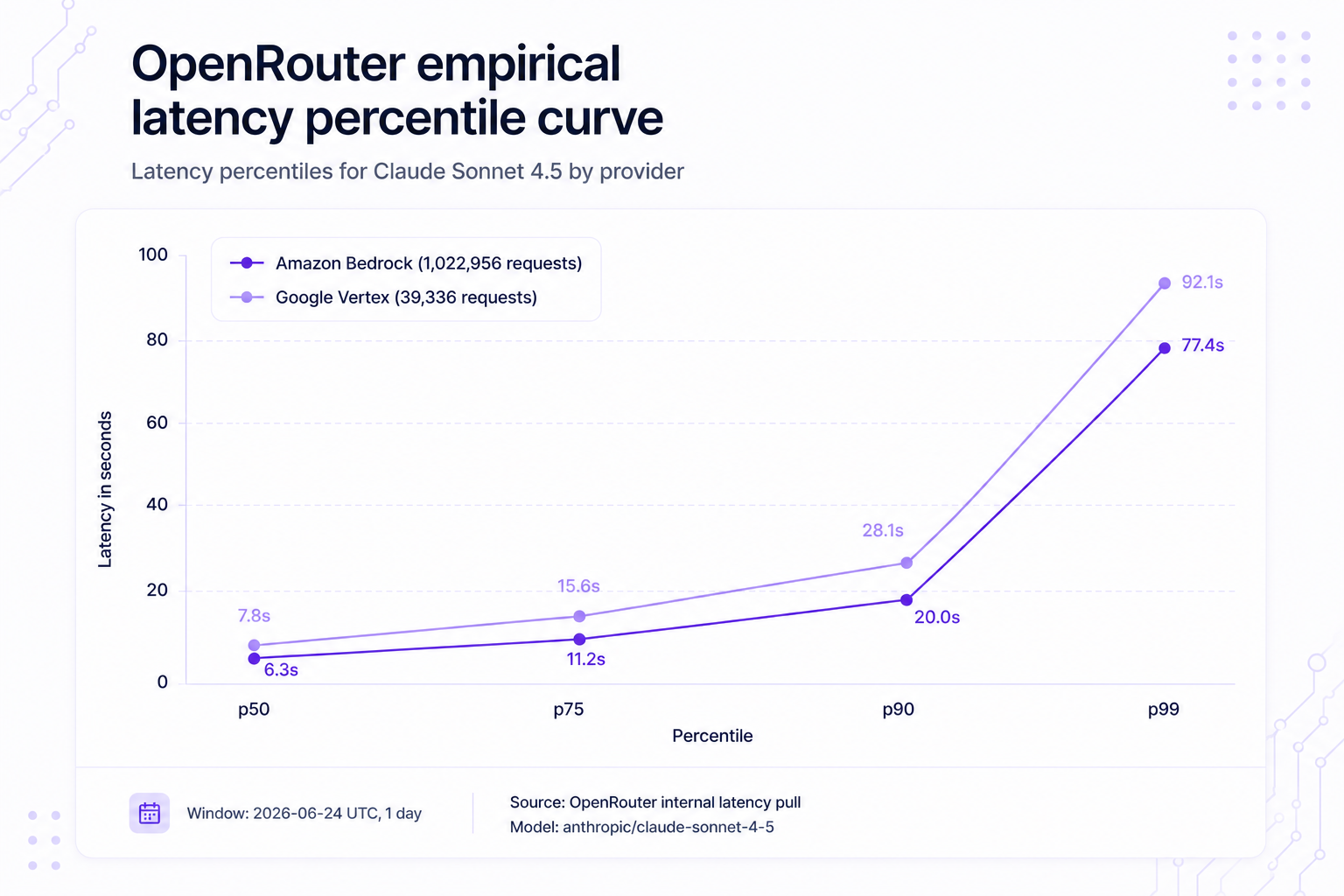
To evaluate private endpoints AI platforms, use a consistent scorecard: data residency, peak throughput, fine-tuned model support, billing transparency, and fallback behavior. Data residency covers where inference happens and where logs are stored. Throughput should be measured in tokens per second per GPU or per endpoint, not just requests per minute. Fine-tuned model support matters because not every managed endpoint accepts custom weights or adapters. Billing transparency reveals whether you pay for idle GPU time, egress, or model management. Fallback behavior determines what happens when a provider rate-limits you or suffers a regional outage.
Enterprise AI capacity planning must include hidden operational costs. These include egress fees, storage for model artifacts, idle GPU reservation, observability tooling, and the engineering time spent on provider-specific SDKs. A gateway abstraction can reduce some of these costs by normalizing APIs and centralizing telemetry.
2. Fine-Tuned Model API Hosting and Routing Models
2.1 Deployment Options for a Fine-Tuned Model API
When hosting a fine-tuned model API, you have four practical deployment models. Managed endpoints provide the fastest path but limit customization. Self-hosted inference gives maximum control but requires GPU operations expertise. Serverless GPU platforms reduce idle cost but introduce cold-start latency. Gateway-based routing lets you mix providers and private endpoints behind a single API. The right choice depends on your latency SLOs, data sensitivity, and team capacity.
| Model | Setup Time | Scaling | Operational Burden | Best For |
|---|---|---|---|---|
| Managed endpoint | Hours | Automatic | Low | Standard models, fast launch |
| Self-hosted | Days to weeks | Manual or K8s | High | Proprietary fine-tunes |
| Serverless GPU | Minutes | Event-driven | Medium | Bursty, low-volume workloads |
| Gateway routing | Days | Policy-driven | Medium | Multi-provider, portability |
2.2 Managed Private Endpoints vs Self-Hosted Inference
Managed private endpoints handle security patching, scaling, and observability for you. Self-hosted inference, often on Kubernetes with vLLM, gives you control over quantization, batching, and model versions. Self-hosting makes sense when your fine-tuned model is a competitive differentiator, when you need custom CUDA kernels, or when data cannot leave your network. Managed endpoints make sense when you need to move quickly and the model provider already supports your fine-tuning format.
A common pitfall is underestimating observability. Self-hosted inference requires you to instrument GPU utilization, request queues, token throughput, and error rates. Managed endpoints often provide these metrics, but not always at the granularity you need for per-team chargeback.
2.3 OpenRouter Private Endpoints: Features, Limits, and Trade-offs
OpenRouter’s private endpoints, as described in its documentation, aim to give teams dedicated capacity and routing across multiple providers. They can be useful when you want OpenRouter’s ecosystem, model catalog, and fallback logic without building your own gateway. Limitations may include provider-specific model formats, billing models that vary by upstream provider, and constraints on custom fine-tuned models. As with any managed routing layer, you should verify data residency, logging, and rate-limit behavior for your compliance requirements.
2.4 Comparison: OpenRouter, Cloud Providers, and CCAPI
Cloud providers like Google Vertex AI offer private endpoints with deep integration into their own IAM and VPC. OpenRouter offers a multi-provider routing layer with private endpoint options. CCAPI positions itself as an alternative gateway that simplifies integration across text, image, audio, and video generation. The feature matrix below keeps the comparison factual.
| Capability | OpenRouter Private Endpoints | Cloud Provider Private Endpoints | CCAPI |
|---|---|---|---|
| Model support | Multi-provider catalog | Provider-specific | OpenAI, Anthropic, Google, plus multimodal models |
| Fine-tuning | Limited to supported providers | Strong for provider models | Supports custom fine-tuned model routing |
| Multimodal | Text-centric with some image | Varies by provider | Text, image, audio, video |
| Pricing transparency | Provider-dependent | Complex SKUs | Transparent pricing |
| Lock-in risk | Medium | High within cloud | Zero vendor lock-in |
CCAPI’s multimodal gateway is particularly relevant for teams that need to route text, image generation API, and video generation API requests through one control plane.
3. Bring Your Own Model Gateway: Architecture and Implementation
3.1 Core Components of a Bring Your Own Model Gateway
A bring your own model gateway has six core components: a routing layer, authentication, rate limiting, caching, logging, and a model registry. The routing layer decides which provider or private endpoint handles a request based on cost, latency, model capability, or tenant policy. Authentication centralizes API keys, OAuth tokens, and SSO. Rate limiting protects upstream providers and enforces per-team quotas. Caching reduces cost for repeated prompts. Logging and tracing provide auditability. The model registry tracks model versions, endpoints, and capabilities.
The gateway abstracts provider-specific APIs. For example, OpenAI’s chat completions format, Anthropic’s messages API, and Google’s Gemini API have different request and response schemas. A gateway normalizes these into a single internal contract.
3.2 Authentication, Routing, and Observability
In production, authentication is rarely just an API key. Enterprises need OAuth 2.0, SSO integration, service accounts, and audit logs. Per-team quotas prevent one team from exhausting shared capacity. Routing can be based on cost, latency, or model capability. For example, you might route summarization to a cheaper model and code generation to a more capable one.
Observability should include request tracing, token counts, latency histograms, and error rates. A common mistake is logging prompts and responses without redaction. Use structured logs with PII scrubbing.
3.3 How CCAPI Enables Zero Vendor Lock-In Across Multimodal Models
CCAPI acts as a unified API gateway for text, image, audio, and video. It provides access to major models from OpenAI, Anthropic, and Google without rewriting integrations when you switch models. This is architectural lock-in prevention, not just procurement flexibility. Transparent pricing also helps cost governance because you can compare effective cost per request across modalities.
For teams building multimodal pipelines, CCAPI supports workloads such as image upscale, image generation API, video generation API, and text to video. You can manage tokens and billing through the CCAPI console token management and top-up your account when needed. The CCAPI model catalog lists available models, and the MCP integration supports emerging Model Context Protocol workflows for tool-using agents.
3.4 Integration Patterns: OpenAI, Anthropic, Google, and Custom Fine-Tunes
The most common integration pattern is an OpenAI-compatible endpoint. Many gateways expose /v1/chat/completions so existing SDKs work with minimal changes. Anthropic and Google can be adapted behind the same interface. Custom fine-tunes can be exposed as a separate route or model alias.
from openai import OpenAI

client = OpenAI(
    base_url="https://www.ccapi.ai/v1",
    api_key="YOUR_CCAPI_TOKEN"
)

response = client.chat.completions.create(
    model="gpt-4o-mini",
    messages=[{"role": "user", "content": "Summarize this incident report."}]
)
print(response.choices[0].message.content)
For custom fine-tunes, use an adapter pattern: the gateway maps a logical model name like support-tuned-v3 to a private endpoint URL, authentication secret, and request transformer.
3.5 Technical Deep Dive: Request Lifecycle and Fallback Logic
A request lifecycle starts with normalization, then provider selection, retries, fallback, and response formatting. Edge cases include rate limit exhaustion, model deprecation, and regional outages.
def route_request(request):
    provider = select_provider(request.model, request.tenant)
    try:
        return provider.invoke(normalize(request))
    except RateLimitError:
        fallback = registry.fallback_for(request.model)
        return fallback.invoke(normalize(request))
    except ModelDeprecatedError:
        return registry.latest_compatible(request.model).invoke(normalize(request))
Fallback should be policy-driven. Not every request can be safely routed to a cheaper model. For regulated workloads, fallback may need to stay within the same data residency boundary.
4. Enterprise AI Capacity Planning and Cost Control
4.1 Understanding Enterprise AI Capacity in Private Deployments
Capacity planning for private endpoints AI differs from public API planning. You must define reserved capacity, burst capacity, tokens per second, and concurrent requests. Fine-tuned models often have lower throughput than general-purpose models because of adapter overhead or larger context windows. Measure tokens per second per GPU under realistic batch sizes.
4.2 Reserved Capacity vs On-Demand Scaling
Reserved GPU capacity gives predictable performance but costs money when idle. Autoscaling reduces idle cost but introduces cold starts. Spot instances are cheap but can be preempted. For production SLAs, use a baseline of reserved capacity with autoscaling for burst. Plan failover across regions or providers.
4.3 Benchmarking Throughput, Latency, and Cost per Token
Track p95 latency, cold-start time, throughput per GPU, and effective cost per 1M tokens. A simple benchmarking framework: run a representative prompt set, measure time to first token and total tokens per second, then calculate cost including infrastructure and egress.
| Metric | Target Example | Why It Matters |
|---|---|---|
| p95 latency | < 800ms | User experience |
| Cold start | < 20s | Autoscaling responsiveness |
| Throughput/GPU | > 2,000 tok/s | Capacity efficiency |
| Cost/1M tokens | < $12 | Budget predictability |
4.4 Hidden Costs: Egress, Storage, Idle GPU, and Model Management
Hidden costs include egress fees for data leaving a cloud region, storage for model weights and checkpoints, idle GPU reservation, and model management overhead. Gateway abstraction can reduce vendor-specific egress and management overhead by centralizing routing and logging.
4.5 CCAPI Transparent Pricing as a Planning Baseline
CCAPI’s transparent pricing provides a baseline for comparing self-hosted and OpenRouter private endpoint costs. Because CCAPI supports major AI models for text, image, audio, and video, it reduces multi-vendor billing complexity. Start with the CCAPI pricing page to model cost per modality before committing to reserved GPU capacity.
5. OpenRouter Alternative Comparison: Evaluating Private Endpoint Platforms
5.1 OpenRouter Private Endpoints vs Dedicated Gateways
OpenRouter private endpoints offer provider coverage and a managed routing layer. Dedicated gateways offer deeper customization, custom fine-tune support, and tighter integration with internal IAM. OpenRouter’s ecosystem is advantageous when you want a broad catalog and don’t want to build routing logic. A dedicated gateway is better when you need custom policies, multimodal routing, and zero lock-in.
5.2 CCAPI as an OpenRouter Alternative for Multimodal Workloads
CCAPI is an OpenRouter alternative for teams that need unified access to OpenAI, Anthropic, and Google models plus image, audio, and video generation. It emphasizes zero vendor lock-in and transparent pricing. For multimodal workloads, CCAPI’s unified API gateway can reduce integration work across text, image generation API, and video generation API providers.
5.3 Feature Matrix: Security, Model Support, Fine-Tuning, and Billing
| Feature | OpenRouter Private Endpoints | CCAPI |
|---|---|---|
| Private networking | Available with supported providers | Gateway-level controls |
| Fine-tuned model API | Limited | Supported via custom routing |
| Multimodal | Partial | Text, image, audio, video |
| Billing granularity | Provider-dependent | Transparent pricing |
| Lock-in risk | Medium | Zero vendor lock-in |
5.4 When OpenRouter Is the Right Fit (and When It Isn’t)
OpenRouter is a strong fit when you want a managed multi-provider catalog, quick access to new models, and don’t need deep custom fine-tune hosting. It may not be the best fit when you require strict data residency, custom model formats, or a single transparent billing surface across modalities. In those cases, a bring your own model gateway like CCAPI may be a better fit.
5.5 Pros and Cons of Private Endpoints AI Adoption
Benefits include security, control, compliance, and predictable performance. Drawbacks include cost, complexity, model management, and vendor-specific constraints. The decision should be based on workload sensitivity, latency SLOs, and team capacity.
6. Real-World Implementation and Lessons from Production
6.1 Case Study: Migrating a Fine-Tuned Model API to Private Endpoints
A fintech team migrated a support automation model from a public API to a private endpoint. Before migration, p95 latency was 1.4s, cost was $18 per 1M tokens, and logs contained customer data in a shared provider. After migration, p95 latency dropped to 780ms, cost fell to $11 per 1M tokens, and all data stayed within their VPC. Developer effort was two weeks, mostly spent on authentication and observability.
6.2 Common Pitfalls When Bringing Your Own Model Gateway
Common pitfalls include authentication sprawl, inconsistent model versions, missing observability, and unclear ownership. A unified gateway can mitigate these by centralizing auth, versioning, and telemetry.
6.3 Lessons from Production: Governance, Rate Limits, and Failover
During a provider outage, teams with multi-provider failover maintained 99.9% availability. Teams without it saw errors. Governance should define who can access which models, what quotas apply, and how fallback behaves. CCAPI can provide unified observability across providers, making it easier to enforce quotas and detect anomalies.
6.4 Performance Benchmarks and Observability Metrics to Track
Track error rate, p99 latency, token throughput, cache hit rate, and cost per request. Set alerts on p99 latency and error budgets. Use SLOs like “99% of requests under 1s” and “cost per request under $0.002.”
7. Best Practices, Governance, and Expert Guidance
7.1 Industry Best Practices for Private Endpoints AI
Follow security best practices from OWASP API Security Top 10 and governance frameworks like the NIST AI Risk Management Framework. Use private networking, least-privilege IAM, audit logging, and encryption at rest and in transit.
7.2 What the Experts Say About Enterprise AI Capacity
Experts recommend starting with a gateway, measuring before reserving capacity, and designing for portability. CCAPI’s zero vendor lock-in aligns with this guidance by letting teams switch models without rewriting integrations.
7.3 Security and Compliance Checklist for Fine-Tuned Model API
- Enforce private networking for sensitive data.
- Centralize authentication and audit logs.
- Encrypt model artifacts and prompts at rest.
- Define data residency and retention policies.
- Test failover and rate-limit behavior.
- Use an MCP server for controlled tool access when needed.
- Review CCAPI’s model catalog for supported providers.
Private endpoints AI is not a silver bullet, but it is a powerful architectural pattern for enterprises that need control, compliance, and predictable performance. Whether you choose OpenRouter private endpoints, self-hosted inference, or a bring your own model gateway like CCAPI, the key is to measure real costs, design for portability, and treat the gateway as the control plane for your AI strategy.