
In-Region Routing: Keep your data in the US or EU
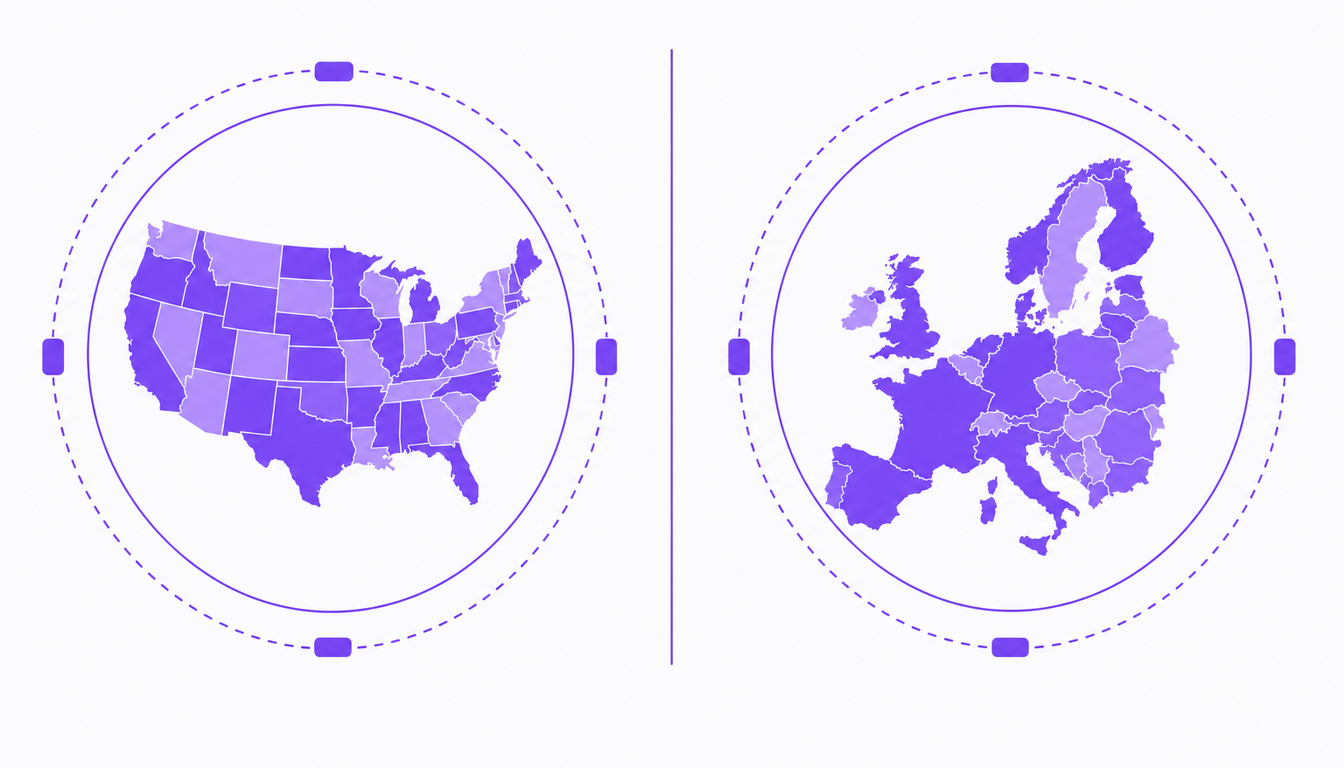
What Is In-Region AI Routing? A Deep Dive for US/EU Deployments
In-region AI routing is the practice of directing AI API requests to model endpoints and data stores that remain within a chosen jurisdiction—typically the United States or the European Union—so prompts, outputs, embeddings, logs, and sometimes training data never leave that boundary. For platform teams, it is not merely a latency optimization; it is a compliance control that affects architecture, contracts, audits, and customer trust. CCAPI, a unified multimodal AI API gateway, is built to enforce these boundaries while giving teams access to OpenAI, Anthropic, Google, and other providers through one integration.
This deep dive covers the core concepts, legal drivers, technical mechanics, implementation steps, and production lessons for in-region AI routing. If you are building an AI API platform for regulated or privacy-sensitive customers, the decisions you make here will shape your ability to sell into the US and EU markets.
What Is In-Region AI Routing? Core Concepts for US/EU Deployments
In-region AI routing is often confused with regional model routing. Regional model routing is broader: it can route requests to the nearest region for latency, to the cheapest region for cost, or to a region with available capacity. In-region AI routing is narrower and stricter. It ensures that the processing and storage of AI request data happens inside a permitted jurisdiction, and it usually enforces that policy before any provider endpoint is selected.
Defining In-Region AI Routing and Regional Model Routing
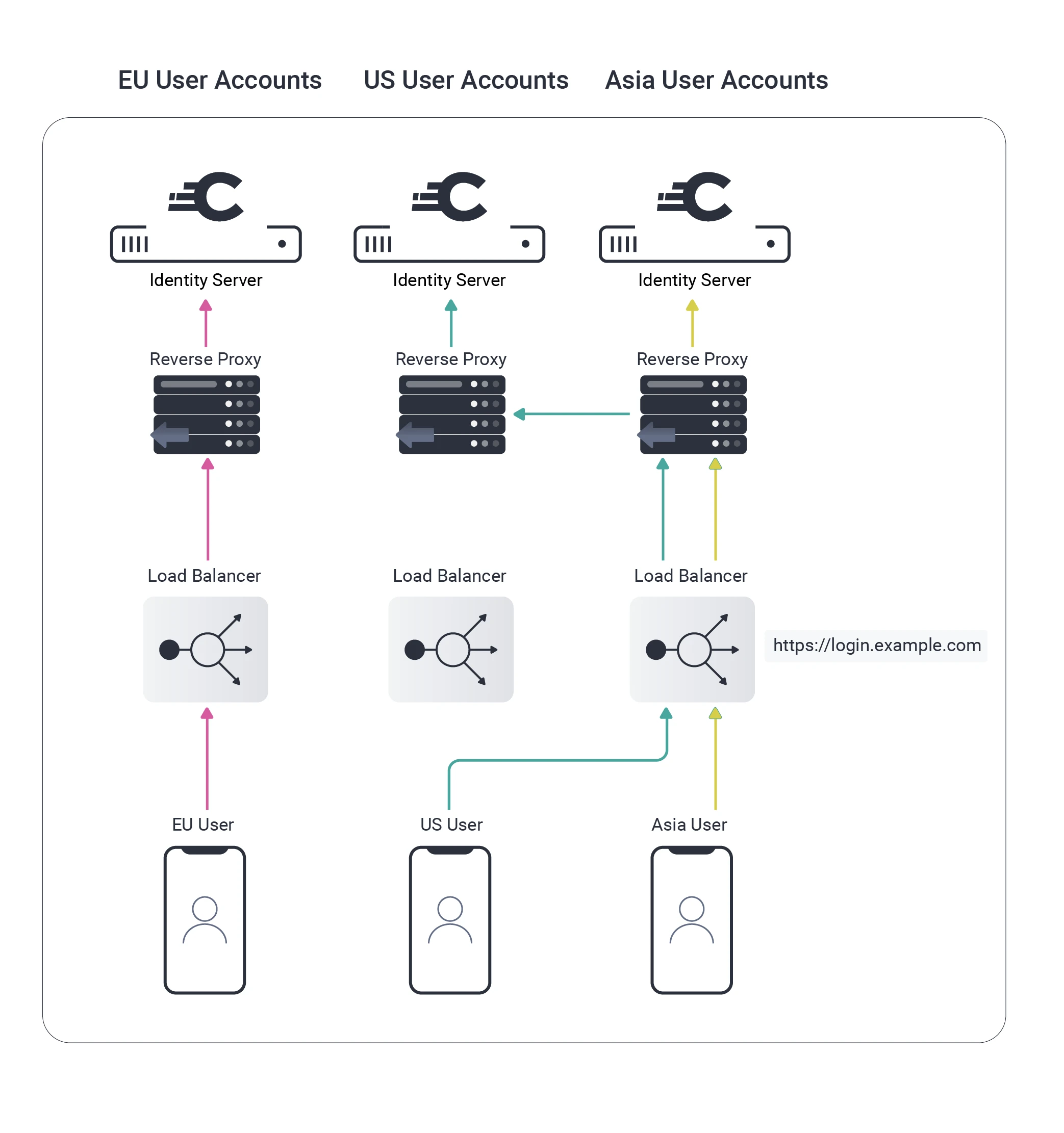
At its core, in-region AI routing involves three interacting layers: routing policies, model endpoints, and data residency requirements. Routing policies define who can use which models under what conditions. Model endpoints are the actual provider regions or deployments that process the request. Data residency requirements state where data may be stored, processed, and logged. If any layer is misconfigured, a US-only workload can silently hit an EU endpoint, or an EU workload can be processed by a US subprocessor.
Regional model routing, by contrast, might allow a request to cross borders if the latency benefit outweighs the compliance risk. That is fine for public, non-sensitive workloads. It is not fine when the request contains protected health information, financial records, or personal data subject to GDPR transfer restrictions.
Data Residency vs. Data Sovereignty vs. Data Localization

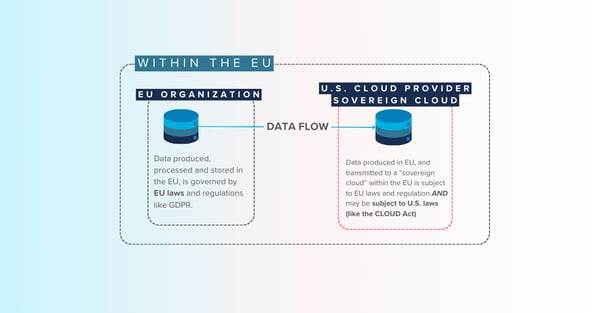
These three terms are frequently used interchangeably, but they create different obligations. Data residency means data is stored in a specific geographic location. Data sovereignty means data is subject to the laws of the jurisdiction where it resides. Data localization is a legal mandate that data must remain within national borders, sometimes with additional requirements for local processing. For AI APIs, the distinction matters because a provider may offer a “US region” while still using a global control plane or a subprocessor in another country.
| Concept | Primary Question | AI API Impact |
|---|---|---|
| Data residency | Where is data stored? | Requires regional storage buckets, logs, and model endpoints |
| Data sovereignty | Which laws apply? | Affects contracts, audits, and government access requests |
| Data localization | Must data stay in-country? | May forbid cross-border failover or global observability |
A practical rule: treat data residency as an architectural constraint, data sovereignty as a legal constraint, and data localization as a hard regulatory boundary.
How In-Region Routing Differs from Global Load Balancing
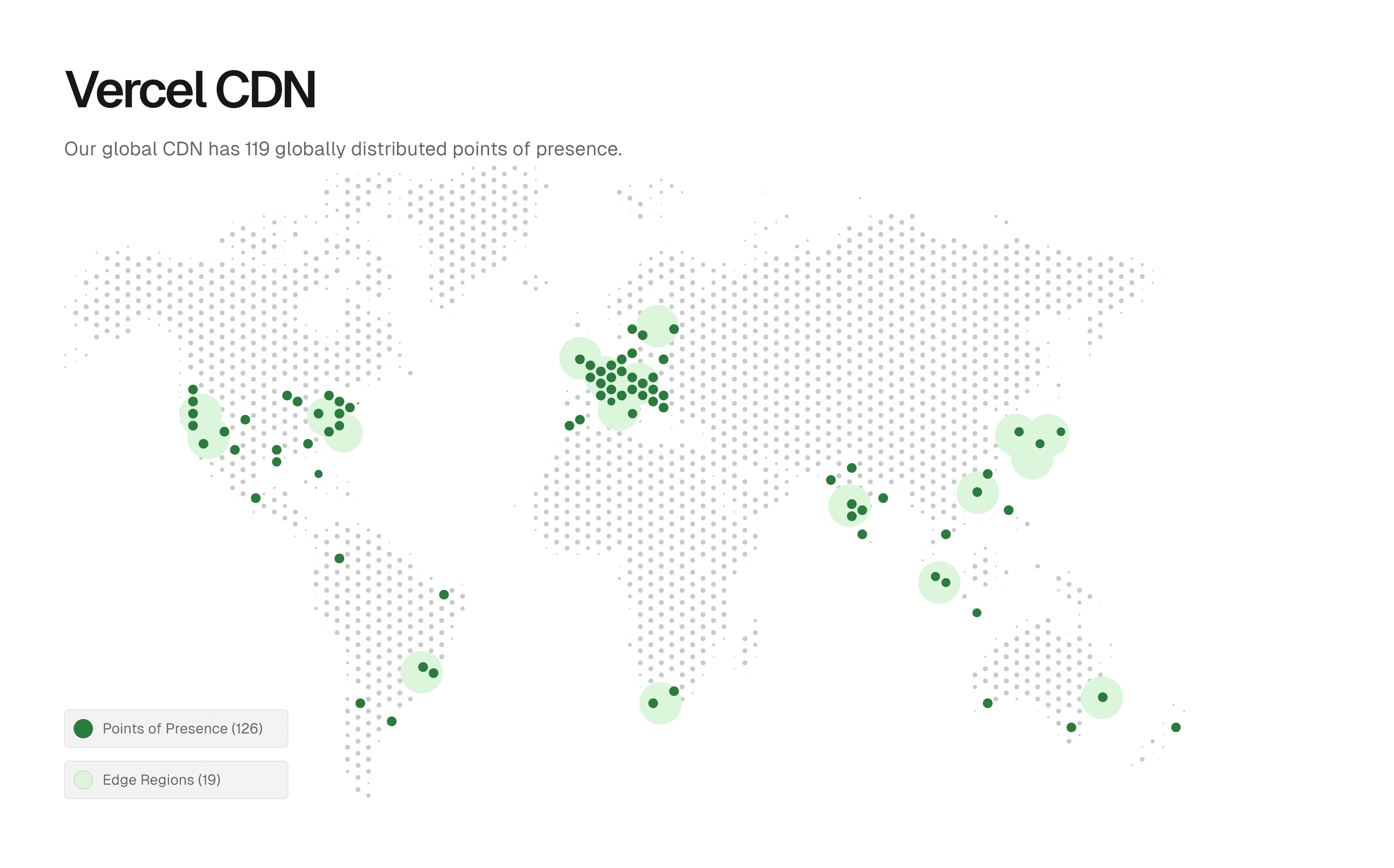
Global load balancing is performance-driven. It sends traffic to the lowest-latency or healthiest region, often using anycast, DNS steering, or a global accelerator. In-region routing is compliance-driven. It may deliberately choose a slower endpoint because the faster one is outside the approved jurisdiction. A global load balancer that fails over from a US endpoint to an EU endpoint is not a compliant in-region router unless the failover policy explicitly checks residency rules first.
This is why “we use a US region” is not enough. The router must know the data classification, the allowed jurisdictions, and the provider’s subprocessor chain before it forwards the request.
Key Stakeholders and AI Use Cases in the US and EU
In-region routing is not only a platform engineering concern. Security teams care about data exposure. Legal teams care about transfer mechanisms and breach notification. Product teams care about feature parity across regions. Compliance teams care about audit evidence. In regulated industries, these stakeholders often have veto power over AI feature launches.
Common use cases include fraud detection in fintech, patient summarization in healthcare, customer support automation in SaaS, and content moderation in social platforms. In each case, the data sensitivity determines whether strict in-region routing is required or merely recommended.
Why Data Residency Matters for AI APIs: US and EU Compliance Drivers

Data residency matters because AI APIs process far more than simple requests. Prompts can contain customer records, source code, legal documents, or medical notes. Outputs can be stored for caching, evaluation, or fine-tuning. Embeddings can be retained as vector indexes. Logs can capture the full request and response. Each of these is a potential cross-border data transfer.
US Regulatory Landscape: Sectoral Rules, State Laws, and Contractual Controls
The US does not have a single comprehensive federal privacy law like GDPR. Instead, it relies on sectoral rules and state laws. HIPAA governs protected health information. GLBA covers financial institutions. FERPA applies to education records. State privacy laws such as the CCPA/CPRA in California and similar laws in Virginia, Colorado, and Connecticut add consumer rights and contractual requirements. Customer contracts often impose stricter US-only processing terms than any statute.
Even a “US region” can involve subprocessor complexity. A provider may route through a content delivery network, use a logging vendor in another country, or rely on a support team with global access. True US data residency requires mapping the entire subprocessor chain, not just the primary model endpoint.
EU Regulatory Landscape: GDPR, Schrems II, EU AI Act, and Transfer Mechanisms
GDPR restricts transfers of personal data outside the European Economic Area unless a valid transfer mechanism exists. After Schrems II, the EU-US Privacy Shield was invalidated, and organizations increasingly rely on Standard Contractual Clauses with supplementary measures. The EU AI Act adds risk management, transparency, and data governance obligations for certain AI systems. In-region AI routing supports data minimization and transfer avoidance by keeping personal data inside the EU.
For AI APIs, this means the provider must offer EU-only processing, EU-only storage, and clear documentation about subprocessors. If a request is routed to a US endpoint for failover, that transfer must be justified and documented. Many compliance teams prefer to avoid the transfer entirely.
Business Risks of Cross-Region AI Processing
The risks are not only fines. Cross-region AI processing can breach customer contracts, trigger audit findings, damage trust, and create notification obligations after a breach. Hidden risks include model training on customer data, subprocessor opacity, and observability pipelines that ship logs to a global SaaS platform. A single misrouted request can become a reportable incident if it contains regulated data.
For teams evaluating an enterprise AI API gateway, the key question is: can we prove that data never left the approved region? If the answer requires manually inspecting provider logs, the architecture is not ready for regulated workloads.
When Strict Data Residency Is Required vs. Recommended
Strict data residency is required when law, regulation, or contract mandates it. Examples include HIPAA-covered entities processing patient data, EU companies handling personal data without a valid transfer mechanism, and financial institutions with US-only contractual commitments. It is recommended, but not always mandatory, for internal analytics, non-sensitive content generation, and public data workloads. The decision should be documented per workload, not assumed globally.
How Regional Model Routing Works Under the Hood
A compliant regional router is a policy engine, not just a reverse proxy. It must tag requests, evaluate rules, select an approved model endpoint, and emit evidence. This is where a unified multimodal AI API gateway like CCAPI adds value: it centralizes policy enforcement while abstracting provider-specific regional APIs.
Request Tagging, Policy Evaluation, and Region-Aware Model Selection
Every request should carry metadata: jurisdiction, data class, tenant, user region, and retention requirement. The router evaluates this metadata against policies before model selection. A simplified policy might look like this:
policy: us_only_financial
match:
  data_class: pii_financial
  jurisdiction: US
allowed_regions: [us-east, us-west]
allowed_models: [gpt-4o, claude-3.5-sonnet]
fallback: fail_closed
logging: us_only
The router then selects only endpoints that satisfy the policy. If no endpoint is available, it should fail closed rather than route to an unapproved region.
Data Plane vs. Control Plane Separation
Control-plane metadata—tenant configuration, policy definitions, billing, model catalog—can often remain global. The data plane—prompts, outputs, embeddings, logs—must stay in-region. This separation is critical for compliant enterprise AI API gateway design. It allows a global dashboard for administration while ensuring that sensitive payloads never leave the jurisdiction.
Latency, Failover, and Consistency Trade-Offs
In-region constraints affect latency, model availability, and failover. A US-only policy may exclude a model that is only available in Europe. An EU-only policy may increase latency for users in Asia. Failover routes must also respect residency rules. If the primary US endpoint fails, the fallback must be another US endpoint—or the request must fail. Consistency across regions can suffer when different model versions are available in different jurisdictions.
Multimodal Routing for Text, Image, Audio, and Video
Routing differs across modalities. Text models may be available in multiple regions. Image generation API endpoints may have stricter regional limits. Video generation API and text to video workloads can involve large payloads and longer processing times, making cross-region transfer more costly and more visible. Audio models may require regional storage for transcripts. CCAPI provides access to OpenAI, Anthropic, Google, and other models through one gateway, so teams can apply consistent regional policies across modalities without building separate integrations.
Building an Enterprise AI API Gateway with CCAPI
CCAPI is designed for teams that need the flexibility of multiple model providers without sacrificing governance. As an OpenRouter alternative with stronger regional policy controls, it centralizes credentials, logging, model selection, and residency enforcement.
Why a Gateway Simplifies Regional Model Routing
Without a gateway, each team may implement its own routing logic for OpenAI, Anthropic, Google, and other providers. That creates duplicated policy code, inconsistent logging, and audit gaps. A gateway centralizes policy enforcement, secrets management, and observability. It reduces the need for custom routing logic across providers and makes it easier to prove compliance.
CCAPI Architecture for US/EU Data Residency
CCAPI can abstract provider regions and route requests to approved endpoints. You define policies for US-only, EU-only, or dual-region processing, and the gateway enforces them at request time. This helps teams avoid vendor lock-in while maintaining transparent pricing and governance. For a closer look at cost controls, see CCAPI pricing.
Accessing OpenAI, Anthropic, Google, and Other Models Without Vendor Lock-In
Teams can switch models or providers without rewriting integrations. This is especially valuable when a model is unavailable in a required region or when pricing changes. CCAPI’s unified AI API supports text, image generation API, video generation API, and other modalities. You can browse supported models in the model catalog and manage credentials in the API token console.
Transparent Pricing and Governance Controls
Regional constraints can affect cost. A model available only in one region may be more expensive or slower. CCAPI provides cost visibility by region and model, so governance teams can audit usage and compare trade-offs. You can top up and monitor spend in the top-up console.
Integrating CCAPI into Existing AI Stacks
Integration is straightforward: replace provider-specific SDK calls with CCAPI’s unified API, configure policies, and hand off observability to your existing stack. For teams using agentic workflows, the MCP server can expose tools and models through a governed gateway. This keeps residency rules consistent across applications.
Implementing US/EU AI Data Compliance Step by Step
Step 1: Map Data Flows and Classify AI Workloads
Identify where prompts, outputs, embeddings, and logs travel. Classify workloads by sensitivity and residency requirement. Not every workload needs strict routing.
Step 2: Define Regional Policies and Allowed Model Endpoints
Create rules for US-only, EU-only, or dual-region processing. Specify which models and providers are allowed in each region. Document exceptions.
Step 3: Configure In-Region Routing Rules in CCAPI
Translate policies into routing rules. Enforce model, region, and fallback constraints. Use fail-closed defaults for regulated data.
Step 4: Validate Residency with Logs, Audits, and Attestations
Use audit logs, request tracing, data-flow reports, and provider attestations. Ensure evidence is exportable for compliance reviews.
Step 5: Roll Out to Production with Guardrails
Stage rollout, canary testing, alerting, and rollback plans. Treat policy violations as security incidents.
Real-World Patterns: In-Region AI Routing in Practice
Financial Services: Keeping PII and Transaction Data In-Region
Banks and fintechs may route fraud detection, summarization, and support AI within US or EU boundaries. Audit and retention needs are strict. Failover must not cross regions.
Healthcare: HIPAA and EU Health Data Considerations
Healthcare AI workloads may require strict regional processing. Sending patient data to unapproved endpoints is a compliance risk. In-region routing prevents accidental exposure.
SaaS and Customer-Facing AI Features
SaaS platforms can offer region-specific AI features. Customer trust and contractual commitments often depend on regional processing. Feature parity may suffer, so product teams must plan for regional model differences.
Lessons from Production Deployments
Start with policy, test failover, document subprocessors, and monitor residency drift. A unified gateway like CCAPI simplifies multi-provider routing and makes audits less painful.
Common Pitfalls in In-Region AI Routing and How to Avoid Them
Assuming All Provider Regions Are Equal
Provider “US” or “EU” regions may differ in subprocessors, logging, and model availability. Verify residency before assuming compliance.
Overlooking Subprocessors and Model Training Data
Hidden risks include subprocessors and data retention for training. Require clear data-processing terms and regional guarantees.
Forgetting Failover and Disaster Recovery
Failover routes can accidentally send data cross-region. Design fallback policies that preserve residency or fail closed.
Cost and Latency Surprises from Regional Constraints
Limiting models to one region can increase cost or latency. Use transparent pricing to compare regional trade-offs.
Vendor Lock-In Disguised as Compliance
Custom regional integrations can create lock-in. A unified gateway like CCAPI helps maintain portability across providers.
Measuring and Monitoring Regional AI Routing Performance
KPIs: Latency, Success Rate, Residency Adherence, Cost per Region
Track latency, success rate, residency adherence, and cost per region. Compliance metrics should be as visible as operational ones.
Auditing and Observability for Data Residency AI API
Logs, traces, and reports should prove data residency. Minimize sensitive data in observability pipelines.
Alerting on Policy Violations and Fallback Events
Alert on cross-region attempts, unapproved models, and fallback activation. Treat policy violations as security incidents.
Reporting for Compliance and Internal Stakeholders
Report residency adherence to legal, security, and executive teams. Use consistent dashboards and audit trails.
Advanced Techniques for Multi-Region AI Workloads
Mature teams can use policy-as-code, regional canary deployments, and split-plane observability. They can also implement deterministic logs that omit sensitive payloads while preserving residency evidence. For multimodal workloads, route image generation API and video generation API requests separately from text to optimize cost and compliance. CCAPI’s gateway model allows teams to mix providers, enforce regional policies, and maintain an audit trail—without rebuilding integrations for every new model.
Conclusion
In-region AI routing is a foundational capability for any organization deploying AI APIs in the US or EU. It requires clear policies, region-aware model selection, fail-closed fallbacks, and continuous monitoring. By using a unified gateway like CCAPI, teams can enforce data residency, avoid vendor lock-in, and give compliance teams the evidence they need. Start with data classification, define your regional policies, and build guardrails before you scale.