
GPT 5.6 Discounts & Jevons Paradox

Understanding GPT 5.6 Discounts: What’s Actually Changing
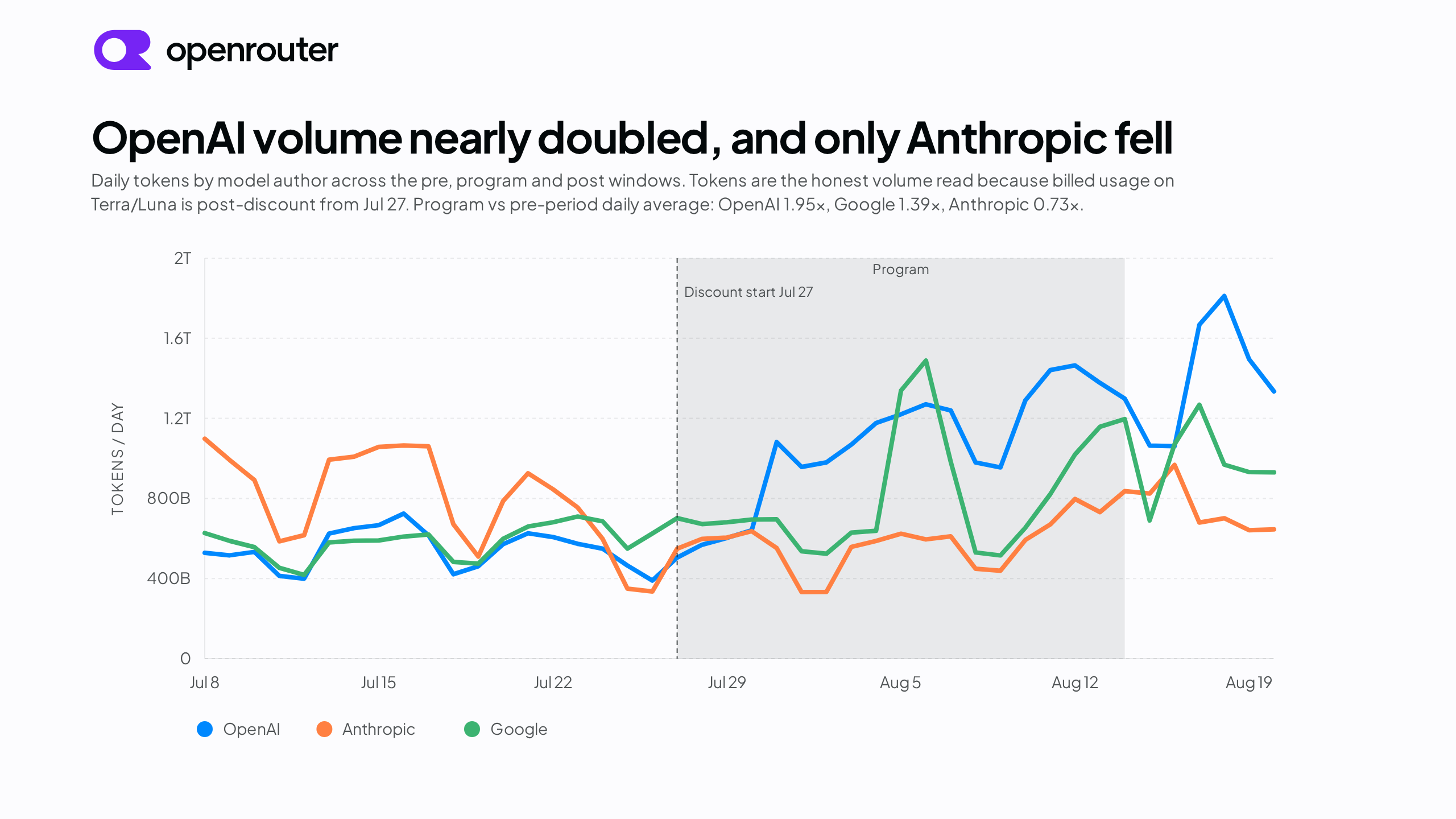
GPT 5.6 discounts have quickly become one of the most talked-about topics in AI API pricing. Headlines promise cheaper tokens, lower inference costs, and a new era of affordable AI products. In practice, however, the real story is more nuanced. When I talk to engineering teams, the excitement is usually followed by a practical question: are these discounts actually going to lower my bill?
The honest answer is: it depends. GPT 5.6 discounts change the unit economics of AI, but they also change behavior. Cheaper tokens invite more usage. More usage can erase the savings. That is the hidden dynamic behind every new pricing announcement. It’s also why I’ve been recommending teams take a closer look at how they consume API capacity, and why many are turning to a unified gateway like CCAPI—an OpenRouter alternative that makes multi-provider pricing easier to manage. But before going there, let’s break down what’s actually changing with GPT 5.6.
The Pricing Shift in GPT 5.6: Direct Discounts vs. Usage-Based Reductions
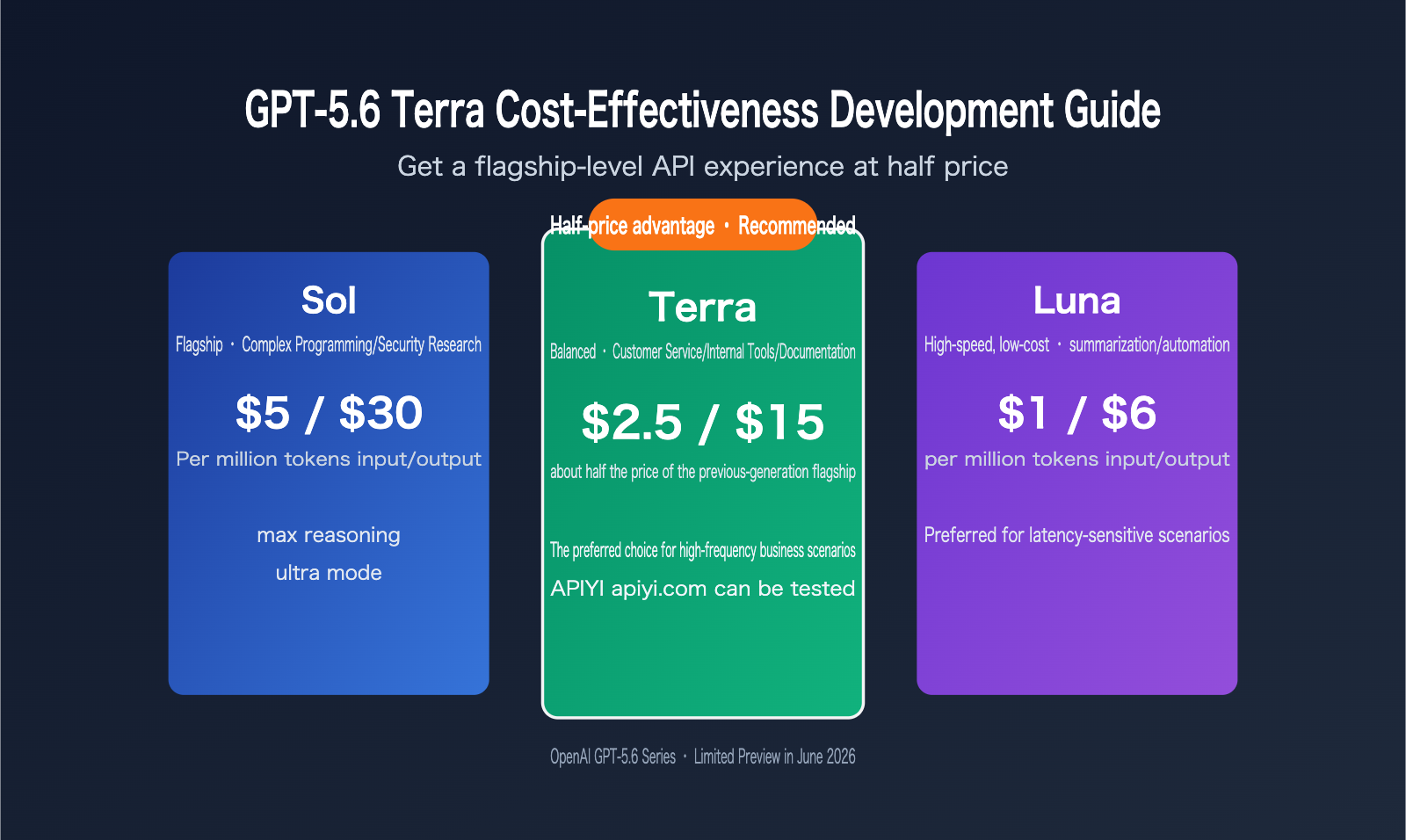
The first thing to understand is that GPT 5.6 discounts are not a single price cut. They operate on at least three different levels: per-token reductions, tier-based volume pricing, and enterprise commitments.
Per-token reductions are the most visible. If you look at recent pricing updates, the cost of both input and output tokens has dropped compared to earlier GPT-5-era models. That is a straightforward price improvement. For a request with a modest number of tokens, the savings are immediate and easy to calculate.
Tier-based volume pricing is more complex. Some providers, including OpenAI, apply different rates depending on your monthly usage tier. The more you use, the lower your per-token price. This sounds great for large companies, but it creates a hidden constraint: to get the best rate, you need to commit to a high minimum volume. If your usage drops, you might fall into a higher-priced tier, or worse, face a shortfall charge.
Enterprise commitments add another layer. Volume discounts are often tied to prepaid credits, annual contracts, or discounts that expire when the contract is renegotiated. In those cases, GPT 5.6 discounts are less like a price cut and more like a financing arrangement.
Here is the hidden insight: a superficial price cut on tokens can be undermined by usage-based costs. For example, a model may advertise lower input costs but have more expensive output tokens, higher caching fees, or more aggressive charges for context-heavy requests. If you only compare headline prices, you may miss the fact that a “cheaper” model costs more in production.
Who Benefits Most from GPT 5.6 Discounts
Not every team benefits equally from GPT 5.6 discounts. In my experience, the winners fall into four groups.
Startups benefit the most in the short term. Lower per-token costs mean a startup can build and test prototypes without watching a credit balance evaporate. This is especially true for natural language processing features like summarization, semantic search, and document extraction.
Serial developers and indie hackers also gain a lot. When you are shipping small tools and experiments, every fractional cent matters. GPT 5.6 discounts can turn a project that was barely profitable into one that generates a positive margin. This is where the discount feels like a genuine unlock.
Enterprises with predictable workloads win through volume pricing. If your company runs stable batch jobs every day, tier-based discounts are easy to model. You know roughly how many tokens you’ll consume, so you can negotiate a commitment that matches your actual usage.
AI-heavy product teams can also benefit, but only if they have good observability. The danger is that a team sees lower unit costs, enables more features, and then ends up with a larger bill. The discount is real, but so is the demand elasticity it creates.
The key takeaway: GPT 5.6 discounts reward teams that understand their usage patterns. If you don’t know your cost per request, no discount will save you money.
How These Discounts Compare to Previous GPT Releases
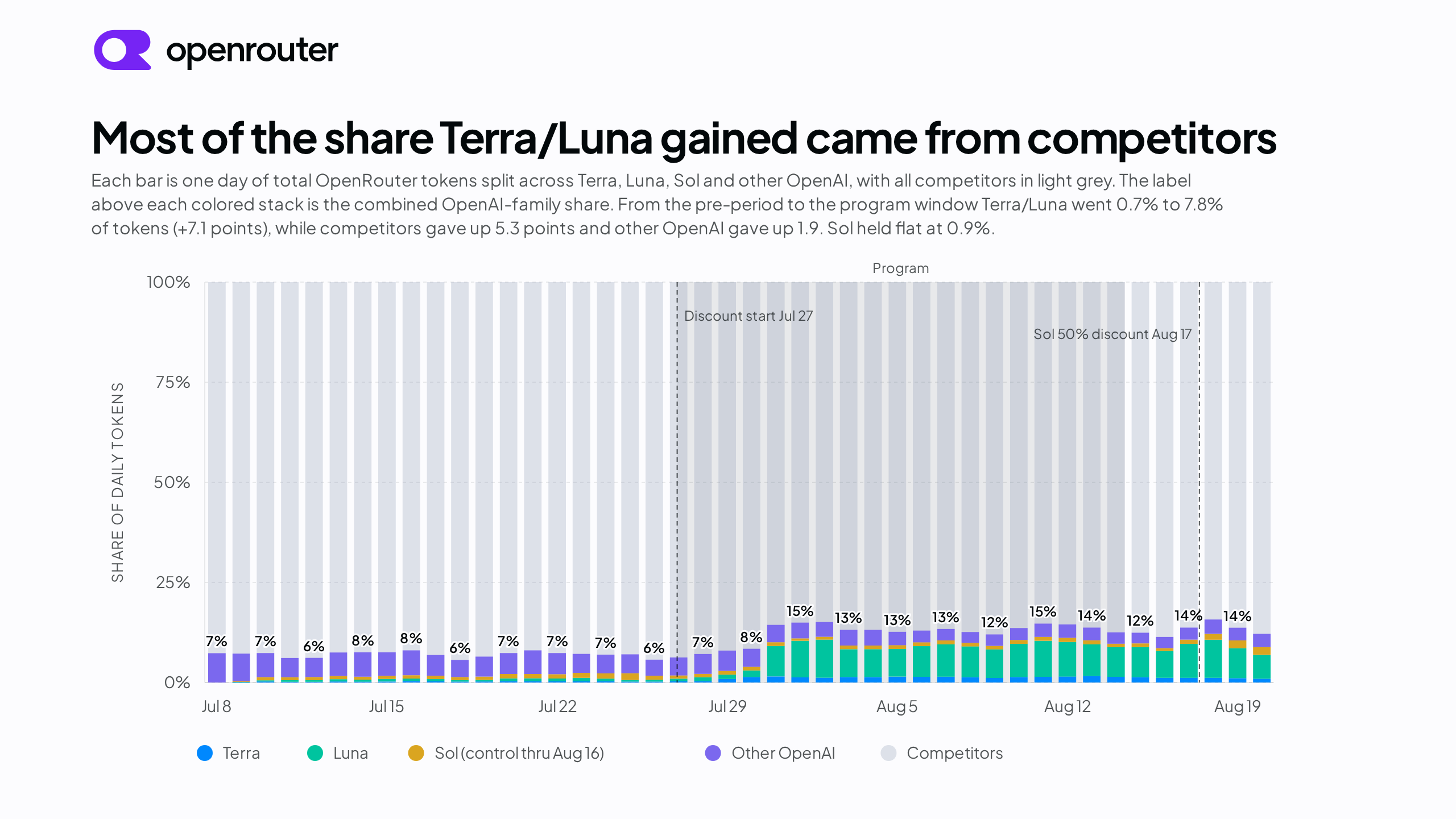
If we look at the pricing trajectory from GPT-3.5 to GPT-4 to GPT-5 and now GPT 5.6, a clear pattern emerges. Each generation of models has delivered better quality at a lower per-token price. That is the general direction of AI pricing.
However, the nature of the discounts has changed. Earlier releases often had simple price cuts. GPT-4 launched expensive, then received moderate reductions over time as optimized serving infrastructure was built. GPT-4o and GPT-4.1 introduced more aggressive tiering and prompt caching. GPT-5 continued that trend. GPT 5.6 discounts appear to be the most structured yet, with a mix of public price reductions and private enterprise deals.
What is different now is the framing. Instead of just lowering list prices, providers are increasingly using discounts to influence behavior. They want you to commit to higher volumes. They want you to stay within their ecosystem. And they want you to scale usage across more product features, because the long-term value of a customer is based on total consumption, not just unit price.
This is why comparing GPT 5.6 discounts to previous releases requires looking beyond the headline price. A deal that looks 30 percent cheaper per token may actually increase your total spend if it encourages you to use the model two times as often. This brings us directly to one of the most important economic concepts in AI pricing: the Jevons paradox.
The Jevons Paradox in AI: Why Lower Costs Can Lead to Higher Spending

The Jevons paradox is named after the nineteenth-century economist William Stanley Jevons. In 1865, Jevons observed that more efficient coal engines didn’t reduce coal consumption. Instead, cheaper coal-powered engines encouraged industries to use them everywhere, and total coal consumption rose.
The same pattern is showing up in AI. GPT 5.6 discounts make tokens cheaper, which encourages developers to use the model more liberally. When a single API call costs less, teams stop thinking about whether a task is worth automating. They add AI features to every corner of the product. They build more chatbots, more classification pipelines, more summarization tools. The result is increased total consumption that can easily offset the lower unit price.
In practice, I’ve seen this happen with almost every major model release. The team celebrates a price cut, then spends the next month watching their API bill increase. The reason is not that the vendor misled them. The reason is that the team changed their behavior in response to the discount.
Demand Elasticity in AI: The Hidden Cost of Cheap Inference

Demand elasticity is the economic term for how sensitive consumption is to price changes. When demand is elastic, a small drop in price leads to a large increase in usage. AI API demand is highly elastic, especially for experimental and low-priority workloads.
Consider what happens when a model price drops. Developers start using the model for tasks that previously had a negative ROI. They run more A/B tests. They generate more candidate outputs. They build internal tools that stay on all day. They also stop optimizing prompts, because the cost of wasted tokens is no longer top of mind.
This is the hidden cost of cheap inference. You don’t need to be reckless to overspend. You just need to let a price drop lower your discipline. The engineering team that once carefully counted tokens now sends entire documents to the model for a trivial extraction task. That is exactly how discounts create revenue growth for the provider, and unbudgeted spend for the customer.
Real-World Scenario: When Discounts Trigger Overuse
Let me walk you through a scenario I’ve seen play out multiple times. A development team integrates GPT 5.6 into a customer support assistant. The unit cost is low. The assistant handles basic queries for about $0.002 per request. The team is excited, and the product manager asks: “Can we also use this to summarize every support ticket at the end of each day?”
The engineer says yes because the model is now cheap enough. Then the marketing team asks if they can use it to generate follow-up emails. The data team wants to classify every piece of customer feedback. The sales team wants a chat assistant for their demo environment.
After four weeks, the team is running close to ten times more requests than they originally estimated. The unit cost is still low, but the total bill has quadrupled. The GPT 5.6 discounts did not fail. What failed was the team’s failure to model demand elasticity. They treated a lower price as free money instead of as a reason to strengthen their cost controls.
This is why pricing transparency is so important.
AI API Pricing Transparency: Cutting Through the Hype
When I talk to technical and financial leaders, the most common complaint is not that AI models are expensive. It is that AI pricing is confusing. There are input token costs, output token costs, caching costs, regional variations, and batch processing discounts. Add in volume tiers and enterprise commitments, and it becomes impossible to make a quick decision.
Transparent pricing matters because it allows both developers and CFOs to plan. If you know the cost per token in a predictable way, you can build a business model around it. If every invoice contains unexpected line items, you cannot trust the platform.
Why Transparent Pricing Matters for Developers and CFOs
Developers care about transparent pricing because it affects architecture decisions. A prompt-caching policy, for example, can dramatically change the cost of a high-usage application. If the pricing page explains caching clearly, the developer can design their system to take advantage of it. If the policy is hidden in a 40-page contract, the developer will be caught by surprise.
CFOs care about transparent pricing because they have to forecast spending. AI budgets now map directly to unit economics. When a CFO sees that GPT 5.6 discounts reduce the cost per successful request, they can plan feature rollouts accordingly. When they see hidden fees, they lose confidence in the provider.
Hidden Fees and Complexity in Multi-Provider AI Pricing
Even within a single provider, there are several variables that complicate pricing. Regional pricing differences are common. A token is not always the same price depending on where it is processed. Output tokens are often priced higher than input tokens. Caching fees can be a fixed cost per cached token, or a separate line item. Rate-limit tiers may lock you out of the best price if you don’t hit a minimum usage threshold. And enterprise contracts often include minimum commitments that make real costs hard to isolate.
When you add multiple providers into the mix, the complexity grows. Comparing GPT 5.6 discounts to Anthropic’s pricing or Google’s pricing requires normalizing all of these variables. That is a heavy lift for most engineering teams.
How CCAPI Brings Transparency to GPT 5.6 and Other Models
This is exactly the problem that CCAPI was designed to solve. CCAPI is a unified multimodal AI API gateway that provides access to major models from OpenAI, Anthropic, and Google for text, image, audio, and video generation. Instead of juggling multiple provider dashboards and contracts, you can use one integration with consistent rate limits and transparent pricing.
CCAPI also gives you the freedom to switch models without rewriting your code. That means you are never locked into a single provider’s pricing structure. If GPT 5.6 discounts look attractive but another model is more reliable for your specific workload, you can route traffic accordingly. You can see your costs more clearly, set budgets, and avoid the chaos of multi-provider pricing.
For many teams, using a gateway like CCAPI is also a way to prevent the Jevons paradox from damaging their bottom line. By centralizing cost data, you can see when discounts are leading to overuse and take action before the invoice arrives.
Enterprise AI Cost Management in the Age of GPT 5.6 Discounts
Enterprises need a structured approach to managing AI costs in this new era. The first step is to build a cost-aware AI stack.
Building a Cost-Aware AI Stack: Unit Economics and Usage Budgets
Instead of relying on list prices, model AI costs at the unit level. For every feature, define the cost per request, per token, and per user session. This gives you a clear picture of how much value each unit of AI generates. Then set internal usage budgets for each team. A team that receives a monthly budget of $2,000 will make different decisions than a team with no constraints.
In practice, I recommend generating a simple spreadsheet at the beginning of each sprint. List the features, the estimated number of requests, the average input and output tokens, and the model you plan to use. Multiply it out. You will quickly see which features are financially viable and which ones are burning money.
Common Pitfalls in Enterprise AI Cost Management
There are a few common mistakes I see repeatedly. Over-optimizing for the cheapest model is a big one. The cheapest model may have lower accuracy, which leads to retries or human review costs that outweigh the savings.
Ignoring prompt complexity is another mistake. Two requests of the same length can have different token counts depending on how the prompt is structured. A bloated prompt with repetitive context will drive up costs even with a good discount.
Failing to monitor idle or runaway workloads is also a major issue. Background jobs, retry loops, and forgotten cron tasks can quietly consume thousands of dollars. Finally, many teams underestimate integration costs. Moving to a discounted model often requires rework, testing, and observability changes that eat into short-term savings.
Lessons from Production: What Enterprises Should Track
From my experience in production systems, there are four metrics that matter more than the list price. First, cost per successful request. This accounts for failures and retries. Second, cost per daily active user. This shows whether an AI feature is sustainable at scale. Third, API latency trade-offs. A cheaper model that is 40 percent slower can hurt user experience. Fourth, provider-specific failure rates. A 0.1 percent failure rate on a high-volume feature can add costly fallbacks.
If you track these metrics, you can make decisions based on real operational data. GPT 5.6 discounts are only valuable if they improve your cost per successful request, not just your cost per token.
Multi-Provider AI Pricing: How to Compare Costs Across Models
By now, it should be clear that comparing model prices is not as simple as looking at two numbers. GPT 5.6 discounts need to be evaluated against the total value each model provides.
Comparing GPT 5.6 Discounts with Anthropic and Google Models
When comparing GPT 5.6 with Anthropic’s Claude models or Google’s Gemini family, use a decision framework that includes performance, price, modality support, and reliability. Price is only one factor. A model with a slightly higher price per token but faster response times might be cheaper in the long run when you factor in lower latency-related infrastructure costs.
Modality support also matters. If your application needs video generation, a text-only model is useless regardless of how discounted it is. This is why the models page at CCAPI is a good starting point. Instead of digging through multiple vendor docs, you can see the capabilities and price points of many models side by side.
The Case for Zero Vendor Lock-In
Depending on a single AI provider is risky. Pricing changes, model quality fluctuates, and new releases can suddenly make your architecture obsolete. Zero vendor lock-in gives you bargaining power. If one vendor raises prices, you can switch. If another vendor releases a model that is significantly better for your workload, you can adopt it without a six-month integration project.
This is especially relevant in the age of GPT 5.6 discounts. A discount today may disappear tomorrow. The provider may change the terms of the discount, shift the tier boundaries, or deprecate the model entirely. If you are not locked in, these changes are an inconvenience rather than a crisis.
How a Unified AI API Gateway Simplifies Multi-Provider Pricing
A unified AI API gateway abstracts multiple providers behind a single integration. You can switch models without rewriting code. You can also route requests to different providers based on cost, latency, or quality. This creates financial flexibility and operational resilience.
CCAPI is a good example of this approach. It gives you access to models from multiple providers through one API, with transparent pricing and no lock-in. For teams that want to take advantage of GPT 5.6 discounts while keeping their options open, this is a practical path forward.
Practical Framework for Evaluating GPT 5.6 Discounts
If you want to decide whether GPT 5.6 discounts are right for your team, use a simple cost model.
Step-by-Step Cost Model for GPT 5.6 Discounts
Start by estimating the number of requests you expect per month. Then estimate the average input tokens and output tokens per request. Multiply those numbers by the relevant token prices. Add any caching costs. Then multiply by your expected demand elasticity. In other words, estimate how many more requests you will make because the price is low.
The formula is simple: total cost = monthly requests × average tokens × price per token × elasticity factor. The elasticity factor is the most important variable. A factor of 1 means no behavioral change. A factor of 3 means the discount will cause you to use three times as many tokens.
Walk through this formula before committing to any volume tier. Then ask yourself if the discount is worth the contractual obligations.
Pros and Cons of Committing to GPT 5.6
Let me give you a balanced view.
| Pros | Cons |
|---|---|
| Lower unit cost for many workloads | Demand elasticity can increase total spend |
| Access to new model features quickly | Risk of being locked into a single provider |
| Better performance for reasoning tasks | Output token costs may still be high |
| Volume discounts for predictable usage | Minimum commitments add financial risk |
| Ecosystem improvements and tooling | Integration costs can offset savings |
The main benefit is obvious: cheaper inference. The main risk is the Jevons paradox. A discount reduces the cost of each unit but increases the total number of units you consume. That is not a reason to avoid discounts, but it is a reason to build guardrails.
When (and When Not) to Prioritize Price Over Model Quality
There are times when a discount should win. If you are building a high-volume classification system where accuracy differences are small, the cheaper model is almost always the right choice. Same for summarization of short documents, simple extraction, and low-stakes chatbots.
But if you are building a feature where accuracy directly affects revenue or safety, price should never be the primary factor. A model that hallucinates 2 percent less can be worth far more than a 20 percent price reduction. For complex reasoning, code generation, and medical or legal assistance, quality and reliability should dominate the decision.
What the Future of AI Pricing Looks Like After GPT 5.6
Looking forward, the pricing trends we are seeing today will likely continue.
The Jevons Paradox as a Pricing Strategy Template
AI vendors may intentionally use aggressive discounts to expand the market. They know that lower prices will increase demand. The business model is built on total consumption, not just unit margin. This means future models will probably launch with attractive discounts to pull customers in, then gradually adjust prices as usage habits solidify.
As a buyer, you should expect price disruption to become the norm. That is not necessarily bad. It creates new opportunities, but it also demands a stronger cost governance strategy.
How Transparent Pricing Will Shape the Next Generation of AI APIs
Transparency will become a competitive differentiator. As enterprises demand clearer cost controls, providers that offer honest, predictable pricing will win more contracts. This is why CCAPI’s focus on transparent pricing and zero vendor lock-in aligns with where the market is heading. Teams want to understand what they pay and why.
Preparing Your Organization for Continuous Price Disruption
The best way to prepare is to build flexible cost governance and architecture early. Use an abstraction layer that lets you switch providers. Track costs at the unit level. Set usage budgets. And review your model choices on a regular schedule, not just when a vendor announces a change.
If you do those things, GPT 5.6 discounts can genuinely save you money. You just have to make sure the discount doesn’t change your behavior in ways that erase the savings.
For teams already exploring this path, CCAPI’s pricing page is a helpful reference for understanding transparent, multi-model costs. And if you are using Claude Code or any other MCP-based tool, CCAPI’s MCP server makes it easy to route model calls through a single gateway. The goal is simple: take advantage of every discount without giving up control.