
ElevenLabs is now on OpenRouter
ElevenLabs OpenRouter Integration: A Comprehensive Deep Dive for Audio AI Developers
The ElevenLabs OpenRouter integration marks a notable shift in how developers can access high-quality voice AI. Instead of negotiating a separate ElevenLabs contract, managing another API key, and writing a provider-specific client, teams can now route text-to-speech requests through OpenRouter’s unified model marketplace. OpenRouter acts as a routing layer that exposes many models behind a single API surface, and ElevenLabs—widely respected for expressive, low-latency voices—is now part of that catalog. For audio AI developers, this promises faster experimentation and simpler multi-provider architectures, but it also introduces trade-offs around control, latency, and cost transparency that deserve a closer look.
1. What Changed with the ElevenLabs OpenRouter Integration
Announcement Overview: ElevenLabs Joins OpenRouter’s Model Marketplace
ElevenLabs has joined OpenRouter’s model catalog, meaning developers can select ElevenLabs voice models alongside text, image, and other audio models through a single API. OpenRouter is not a model provider itself; it is a routing layer that authenticates requests, maps them to the appropriate provider endpoint, and returns the response in a normalized format. This abstraction lets a team call ElevenLabs without embedding ElevenLabs-specific SDKs into their codebase.
Why the ElevenLabs OpenRouter Integration Matters for Audio AI Developers

The immediate win is reduced integration overhead. Instead of building a new vendor integration for every audio provider, you can point your existing OpenRouter client at an ElevenLabs model ID. This is especially useful for teams that already use OpenRouter for text generation through models like Claude, GPT, or Gemini. The same billing account, API key, and request pattern can now produce speech. However, the abstraction comes at a cost: provider-specific controls such as advanced voice settings, custom pronunciation dictionaries, or fine-tuned voice models may not be exposed through the gateway.
Immediate Implications for Teams Using Multi-Provider Audio APIs
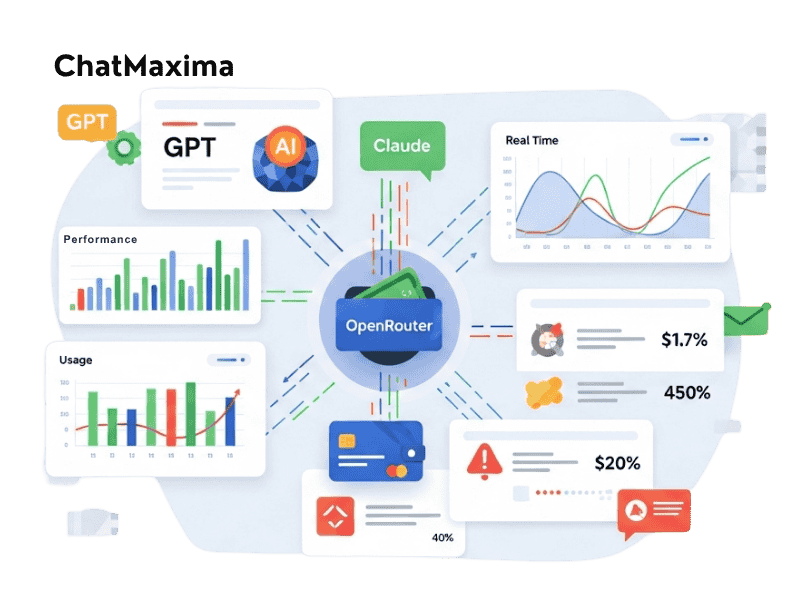
If your stack already uses a multi-provider audio API strategy, the ElevenLabs OpenRouter integration gives you a low-friction way to benchmark ElevenLabs against your current vendors. You can run A/B tests on latency, cost per character, and voice consistency without signing a new contract. In practice, I’ve seen teams spend weeks on procurement and SDK wiring just to test a single voice provider. OpenRouter collapses that cycle. That said, do not migrate production traffic until you have measured end-to-end latency and verified that the gateway exposes the voice parameters your product depends on.
Hidden Insight: Aggregation vs. Direct Control
Aggregation simplifies access, but direct ElevenLabs API usage still wins for advanced voice cloning, custom model fine-tuning, strict data residency requirements, and granular compliance controls. OpenRouter is a convenience layer, not a replacement for a direct provider relationship when your product’s differentiation depends on deep voice customization. Treat the gateway as an experimentation and fallback path, and keep a direct integration for high-stakes production workloads.
2. How the ElevenLabs OpenRouter Integration Works Under the Hood
Request Flow: From OpenRouter API to ElevenLabs Voice Models
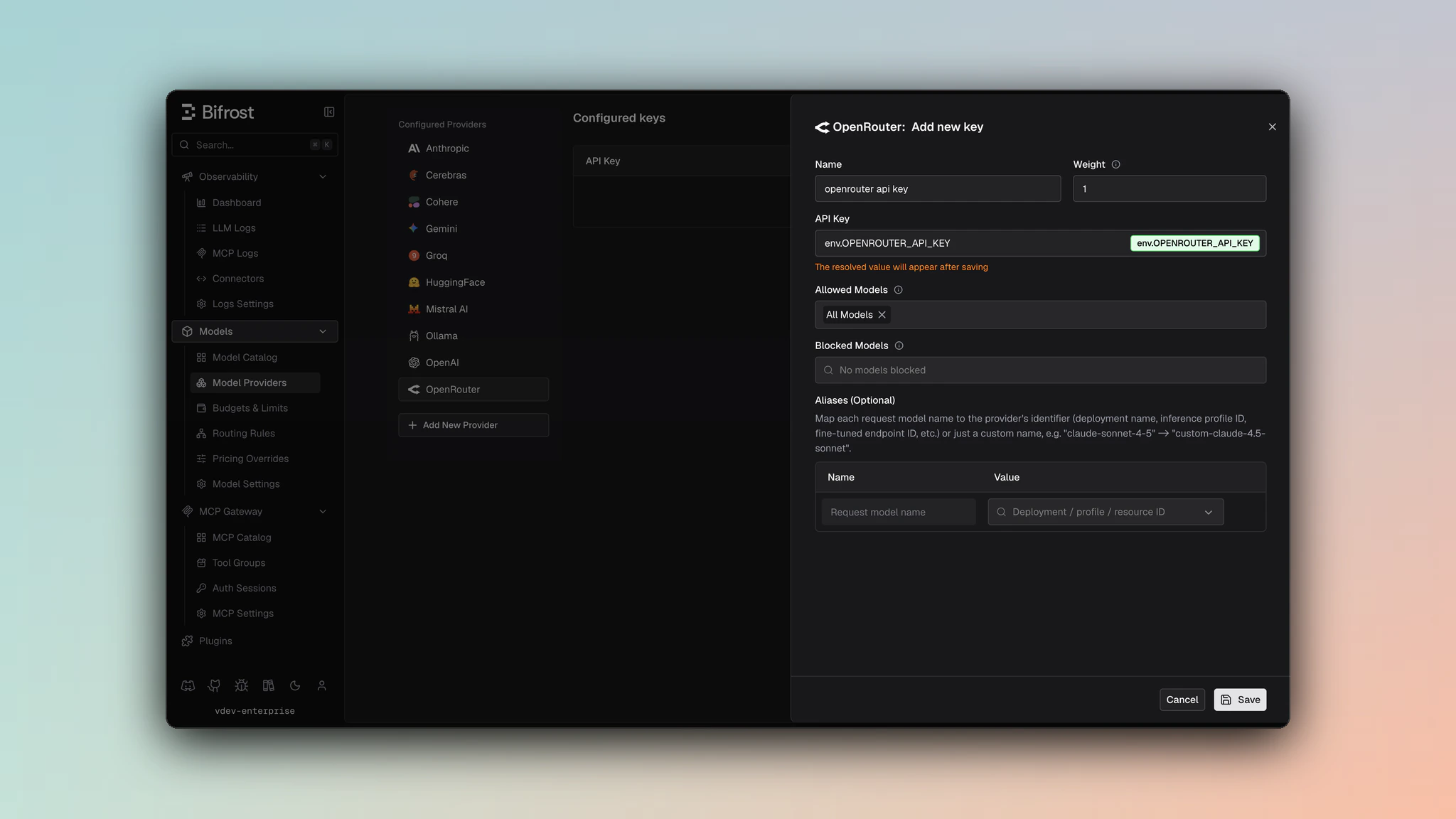
A client sends a request to OpenRouter’s API with a model identifier that maps to ElevenLabs. OpenRouter authenticates the request using your OpenRouter API key, selects the target provider, transforms the payload into ElevenLabs’ expected format, and returns the audio output. This means your application talks only to OpenRouter; it never sees ElevenLabs’ endpoint structure unless you inspect the response metadata. The flow is similar to how OpenRouter handles text models, but audio responses may be streamed or returned as binary data depending on the endpoint.
Authentication, Model Selection, and Endpoint Mapping

Developers authenticate with a single OpenRouter key. Model selection happens through OpenRouter model IDs, which are listed in the OpenRouter documentation. OpenRouter maps those IDs to ElevenLabs endpoints and handles provider authentication behind the scenes. Access control, rate limits, and usage tracking are managed at the OpenRouter layer. This is convenient, but it also means your team cannot directly adjust ElevenLabs-specific quotas or voice settings unless OpenRouter exposes them.
AI Model Routing Logic, Fallbacks, and Latency Considerations
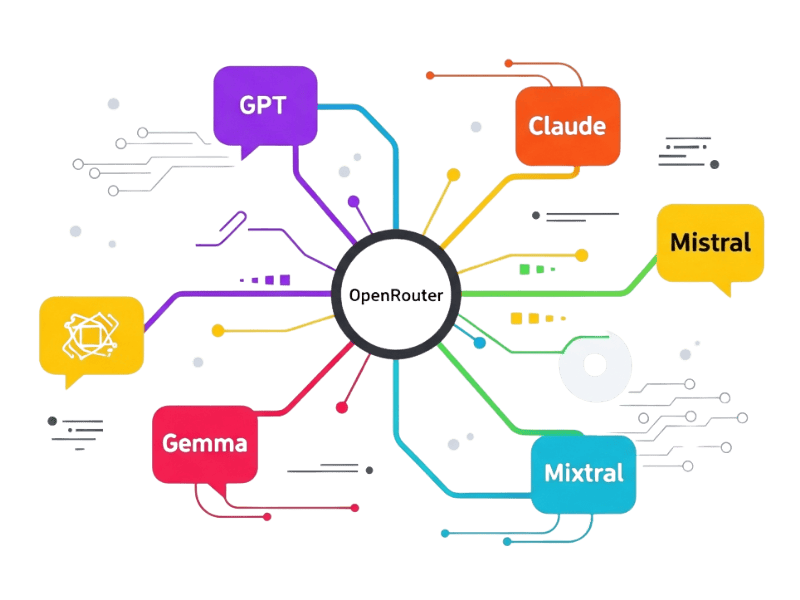
OpenRouter’s routing logic can choose between providers based on availability, cost, or explicit user preferences. If ElevenLabs is unavailable, a fallback model may be used—if you configure one. The extra routing hop adds latency, often in the range of tens to low hundreds of milliseconds. A common mistake is measuring only the provider’s response time and forgetting the gateway overhead. Always measure end-to-end time from your client to the final audio byte. For real-time voice agents, even 150 ms of additional latency can degrade the conversation experience.
Supported Audio Features and Known Limitations
Through OpenRouter, you can likely access text-to-speech, voice selection, and possibly streaming, depending on the current integration. What may not be exposed includes advanced voice cloning, fine-tuning, provider-specific SSML tags, and custom pronunciation lexicons. If your application relies on those features, check the ElevenLabs API reference and compare it with what OpenRouter exposes. The gap between gateway features and direct API features is the single most important thing to validate before committing.
3. Practical Benefits of a Unified AI API Gateway for Audio
Simplifying Multi-Provider Audio API Access
A unified gateway reduces the need for separate SDKs, API keys, and billing accounts. Instead of maintaining a client for ElevenLabs, another for Azure Speech, and another for Google TTS, you can route all of them through one API. This is the core promise of a multi-provider audio API: one integration, many voices. For teams that ship quickly, this can cut weeks of engineering time.
Reducing Integration Overhead with One API Key and Billing Layer
One API key and one billing layer simplify operations. You can track usage across providers in a single dashboard, set unified rate limits, and avoid the finance overhead of multiple vendor invoices. Prototyping becomes faster because you can swap models by changing a string. Production becomes more manageable because you have one place to monitor errors and costs.
Improving AI Model Routing Across Text, Image, Audio, and Video
AI model routing is not just about audio. Modern applications combine text generation, image generation, and video generation. A gateway that supports all modalities lets you orchestrate complex pipelines—for example, generate a script with a text model, create visuals with an image generation API, and narrate it with ElevenLabs. When all models share a common gateway, you can apply consistent logging, retries, and cost controls.
How CCAPI Approaches Unified Multimodal AI Access
CCAPI is a unified multimodal AI API gateway that provides access to major models from providers like OpenAI, Anthropic, and Google for text, image, audio, and video generation. It emphasizes transparent pricing and zero vendor lock-in. If you are exploring an OpenRouter alternative for audio-heavy workloads, you can review CCAPI’s model catalog and transparent pricing to see how it compares. The goal is similar: one API, many providers, fewer integration headaches.
4. Real-World Use Cases for ElevenLabs + OpenRouter
Voice-Enabled Chatbots and Assistants
Teams can add ElevenLabs voices to chatbots through OpenRouter without building a new vendor integration. Customer support bots, interactive characters, and IVR systems benefit from expressive voices. In practice, the biggest challenge is not generating speech—it is managing turn-taking latency. If the gateway adds 100 ms, the bot can feel sluggish. Test with real users before deploying to production.
Multimodal Content Pipelines: Text, Image, Audio, and Video
A single gateway can orchestrate text generation, image creation, and audio narration. For example, a content pipeline might use a text model to write a product description, an image generation API to create a hero image, and ElevenLabs to produce a voiceover. CCAPI is an example of a unified multimodal AI API gateway that supports such pipelines, including text-to-video and video generation API capabilities. This reduces the number of vendor relationships and simplifies orchestration.
Dynamic Text-to-Speech in Applications with Multiple Providers
Apps can switch between ElevenLabs and other audio models based on cost, language, or quality. A language-learning app might use ElevenLabs for English and a cheaper provider for less critical languages. The risk is voice inconsistency. Users notice when a brand voice changes mid-session. Always test voice consistency across providers and consider maintaining a fallback voice that sounds similar.
Rapid Prototyping vs Production Deployment
OpenRouter is excellent for rapid prototyping. You can test ElevenLabs in minutes. Production is different: you need SLAs, data residency guarantees, custom voice controls, and predictable pricing. A hidden insight from teams that have done this: production often requires either a direct provider contract or a gateway with transparent pricing and strong governance. Do not assume that a prototyping gateway automatically meets production requirements.
5. Comparing OpenRouter and CCAPI as an OpenRouter Alternative
Feature Comparison: Model Catalog, Audio Support, and Pricing Transparency
| Feature | OpenRouter | CCAPI |
|---|---|---|
| Model catalog | Broad, multi-provider | Multimodal, major providers |
| Audio support | ElevenLabs and others | Audio generation alongside text, image, video |
| Pricing transparency | Provider-dependent | Transparent pricing focus |
| Vendor lock-in | Gateway dependency risk | Zero vendor lock-in positioning |
| Multimodal routing | Strong for text, growing for audio | Unified across modalities |
OpenRouter focuses on routing across many providers. CCAPI emphasizes unified multimodal access and transparent pricing. The right choice depends on whether you prioritize breadth of model discovery or deep multimodal integration.
Vendor Lock-In, Governance, and Multi-Provider Flexibility
Using a gateway can reduce direct vendor lock-in, but it may create gateway dependency. If your application is tightly coupled to OpenRouter’s request format, switching later takes work. CCAPI’s zero vendor lock-in positioning addresses this by making it easier to move between providers. Governance also matters: you need to know where your audio data is processed, how long it is retained, and who has access.
When to Choose OpenRouter vs a Unified AI API Gateway
Choose OpenRouter for broad model discovery, especially if you want to experiment with many text and audio models quickly. Choose a unified AI API gateway like CCAPI for multimodal needs, predictable pricing, and simplified vendor management. If your product depends on voice as a core feature, evaluate both against your production requirements.
How CCAPI Handles Multi-Provider Audio API Integration
CCAPI provides one API for audio generation alongside text, image, and video. It reinforces transparent pricing and no vendor lock-in. For teams that need an OpenRouter alternative with a stronger multimodal focus, CCAPI is worth evaluating. You can start by checking the CCAPI console token flow for API keys and the CCAPI top-up page for billing clarity.
6. Real-World Implementation: Adding ElevenLabs via OpenRouter
Step-by-Step Example: Sending a Text-to-Speech Request
The exact endpoint and model ID may change, so verify against the OpenRouter API reference. A simplified request looks like this:
curl https://openrouter.ai/api/v1/audio/speech \
  -H "Authorization: Bearer $OPENROUTER_API_KEY" \
  -H "Content-Type: application/json" \
  -d '{
    "model": "elevenlabs/eleven_multilingual_v2",
    "input": "Hello from ElevenLabs via OpenRouter.",
    "voice": "Rachel"
  }' --output speech.mp3
You authenticate with your OpenRouter key, select an ElevenLabs model, send text, and receive audio. Handle the response as binary data and save it to a file or stream it to the client.
Handling Provider Outages and Fallback Routing
Fallback strategies are essential. If ElevenLabs is unavailable, route to another audio provider. But beware: fallback can change voice quality, pronunciation, and emotional tone. Test fallback voices against your brand guidelines. A common mistake is enabling fallback without alerting users or logging the switch.
Monitoring Cost, Quality, and Latency Across Audio Models
Track cost per character, latency percentiles (p50, p95, p99), audio quality scores, and error rates. Build dashboards that compare providers side by side. Run A/B tests with real users. Transparent pricing helps you avoid surprises when usage scales.
Common Pitfalls When Mixing Audio Providers Through One Gateway
Pitfalls include inconsistent voice branding, hidden markup costs, rate-limit mismatches, and debugging difficulty. A hidden insight: log request IDs from both the gateway and the provider. When something goes wrong, you need to correlate logs across layers. Without that, troubleshooting becomes guesswork.
7. Industry Best Practices for Multi-Provider Audio APIs
Security, Compliance, and Data Residency
Audio data may pass through a gateway, so encryption in transit and at rest is non-negotiable. Understand retention policies and regional compliance requirements. If you handle health or financial data, verify that the gateway and provider meet your regulatory obligations.
Maintaining Voice Consistency Across Models
Preserve brand voice with voice style guides, reference samples, and automated quality checks. When switching providers, compare waveform similarity and listener preference. Consider keeping a primary voice and a fallback voice that are acoustically close.
Benchmarking Audio Quality, Latency, and Cost Efficiency
Use blind listening tests, latency percentiles, and cost-per-minute calculations. Mention that transparent pricing helps avoid surprises. Benchmark regularly because provider performance changes over time.
What Official Documentation and Experts Recommend
Read the OpenRouter documentation and ElevenLabs documentation. Test rate limits, validate production readiness, and follow security best practices. Official docs are the authoritative source for model IDs, parameters, and limits.
8. Future of the ElevenLabs OpenRouter Integration and AI Model Routing
Expected Changes in Provider Availability and Pricing
More audio models will likely join OpenRouter. Pricing may shift as competition among multi-provider audio APIs increases. Expect more granular controls and streaming support over time.
What Developers Should Watch Next
Monitor new model endpoints, streaming support, voice cloning availability, and changes to rate limits. These signals tell you when the gateway is ready for production workloads.
Building a Future-Proof Multi-Provider Audio Stack with CCAPI
CCAPI’s unified multimodal AI API gateway can help teams avoid lock-in and adapt as providers change. It reinforces transparent pricing and access to major AI models. For teams that need a flexible OpenRouter alternative, CCAPI offers a path to a future-proof audio stack.
9. Trust and Decision Guide
Pros and Cons of the ElevenLabs OpenRouter Integration
| Pros | Cons |
|---|---|
| Easy access to ElevenLabs | Extra latency from routing hop |
| Unified billing and API key | Limited provider-specific controls |
| Quick testing and A/B comparisons | Possible cost opacity |
| Multimodal orchestration | Gateway dependency risk |
When to Use OpenRouter vs Direct or CCAPI
Use OpenRouter when you want fast experimentation and broad model discovery. Use direct ElevenLabs when you need advanced voice cloning, custom models, or strict compliance. Use a unified gateway like CCAPI when you need multimodal access, transparent pricing, and zero vendor lock-in. The ElevenLabs OpenRouter integration is a strong step toward simpler audio AI, but it is not a one-size-fits-all answer. Evaluate your latency, cost, and control requirements, then choose the layer that matches your production reality.