
Case Study: How Descript Took New Models Off the Engineering Queue
AI Model Integration Bottleneck: A Descript Case Study on Unified Multi-Provider AI Access
When Descript’s product roadmap began demanding faster access to new audio, video, image, and text models, the constraint was not model availability. It was the engineering queue. Every new provider promised better transcription, voice synthesis, scene understanding, or generative editing. Yet each one arrived with its own SDK, authentication flow, data schema, and operational quirks. The result was a familiar pattern for many AI-powered products: AI model integration became the bottleneck, not model quality.
This deep-dive examines how Descript’s situation unfolded, why one-off integrations multiplied engineering work, and how a unified AI API gateway model can move new models off the critical path. It is a case study in technical architecture, trade-offs, and the operational discipline required to keep multi-provider AI access from becoming a permanent tax.
Case Study Context: Why Descript’s AI Roadmap Hit an Engineering Bottleneck
Descript’s editing, transcription, voice, and video features create constant demand for multiple model types and providers. The engineering queue became the constraint, not model availability.
Descript’s Product Surface and Rising AI Feature Demand
Descript is not a single-model product. It combines transcription, speaker detection, voice cloning, studio sound, eye contact correction, green screen, and generative editing. Each capability can benefit from a different model family: speech-to-text, text-to-speech, audio enhancement, image generation, video generation, and large language models for script assistance.
As the roadmap expanded, product managers wanted to test models like Nano Banana for image edits, GPT Image for visual generation, and specialized text to video models for B-roll. They also wanted fallback options from providers such as Anthropic, Google, and OpenAI. The demand was rational. The problem was that every new model arrived as a new integration project.
The Hidden Cost of One-Off AI Model Integration
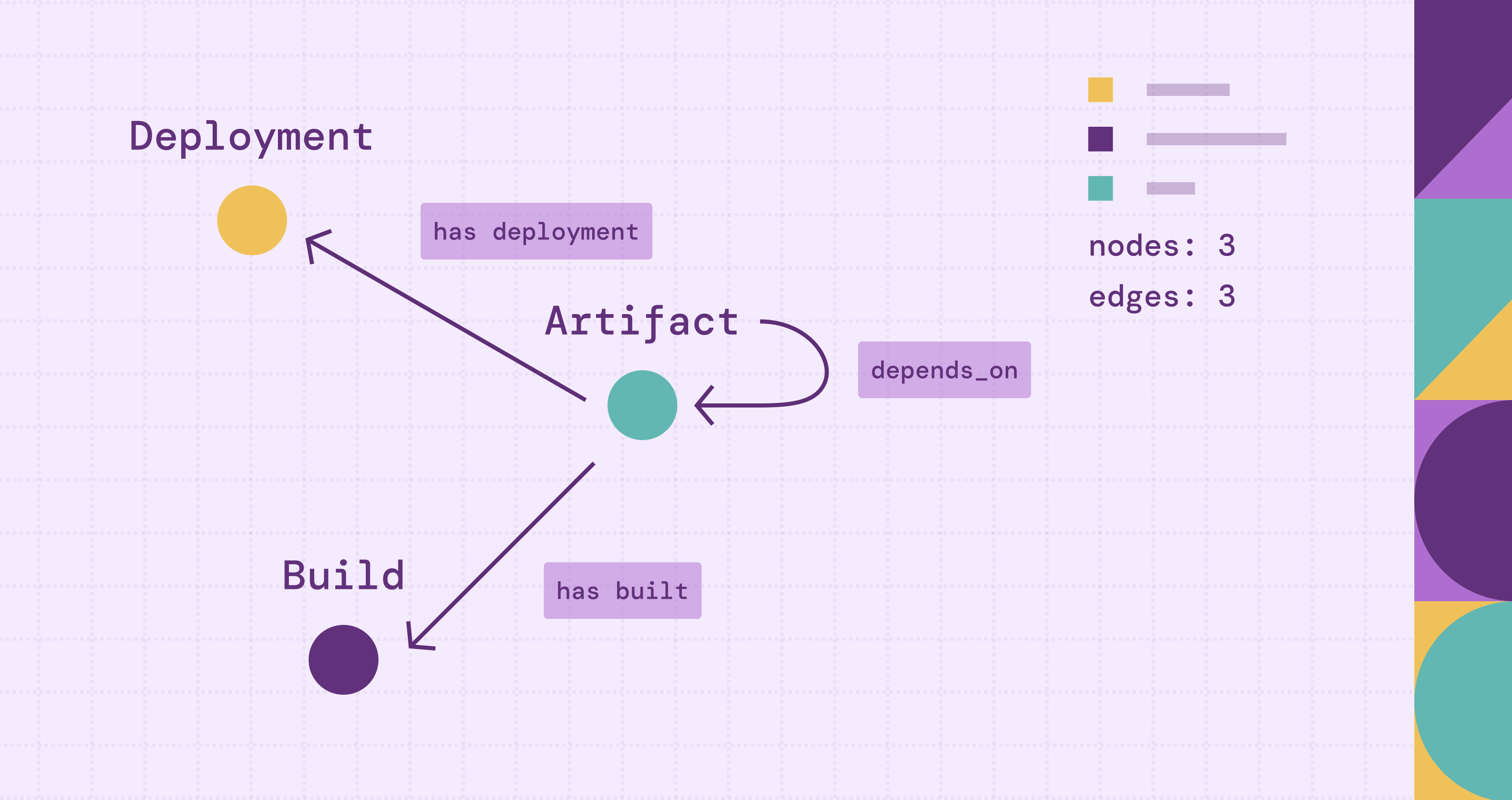
A one-off integration is never just an API call. It includes SDK installation, authentication, request mapping, response parsing, streaming adaptation, file upload logic, retry behavior, error normalization, and QA. For a single model, that work might take a week. Across ten models and three teams, it becomes a recurring tax.
In practice, teams often underestimate the long tail. A provider might change a rate limit header, alter a streaming chunk format, or deprecate a field. Each change requires investigation, patching, and regression testing. The hidden cost is not the first integration. It is the second, third, and tenth maintenance cycle.
Symptoms of a Stalled Engineering Queue
:max_bytes(150000):strip_icc()/queuing-theory.asp_final-81012c5112fe4401b11462166ccb6856.png)
The symptoms are easy to recognize. Model launches slip from “this sprint” to “next quarter.” Provider-specific code gets duplicated across services. Experimentation slows because data scientists cannot test a new model without engineering help. Product managers wait on engineering capacity for what should be a configuration change.
Another symptom is architectural drift. One team uses a custom retry wrapper for Provider A. Another team builds a different wrapper for Provider B. Cost tracking lives in a spreadsheet. Observability is inconsistent. The organization knows it has an AI model integration problem, but the problem is distributed across many small decisions.
Metrics That Revealed the Bottleneck
Descript’s team, like many platform teams, needed metrics to expose the queue. The most revealing were time-to-model, engineering hours per integration, number of active provider adapters, and backlog age.
Time-to-model measured the elapsed time from “we want to test this model” to “it is available in production.” Engineering hours per integration captured the full lifecycle, not just the first commit. Active provider adapters tracked how many bespoke code paths existed. Backlog age showed how long model requests waited behind other integration work.
These metrics turned a vague complaint into a concrete constraint. The issue was not that models were unavailable. The issue was that the organization could not absorb them fast enough.
The Core Problem: AI Model Integration as a Queue Multiplier

Every new model did not just add capability. It multiplied integration work across teams. A single model addition could require changes in the API layer, the orchestration layer, the billing layer, the evaluation pipeline, and the frontend. The queue grew faster than the team could hire.
Provider-Specific SDKs, Auth, and Data Formats
OpenAI, Anthropic, Google, and others differ in request shapes, streaming, file handling, and rate limits. One provider uses messages arrays. Another uses contents. One streams JSON lines. Another streams server-sent events. One accepts base64 images. Another requires a file upload first.
Authentication varies too. Some use bearer tokens. Some use API keys in headers. Some support OAuth. Rate limits are expressed differently, and error codes rarely map cleanly. A unified abstraction must normalize all of this without hiding important provider-specific behavior.
Multi-Provider AI Access Creates Duplicated Work
Without a centralized gateway, teams rebuild similar routing, retry, logging, and cost-tracking logic for each provider. One team writes a retry policy with exponential backoff. Another team writes a simpler retry. One team logs token usage. Another logs latency only.
This duplication is expensive, but the bigger cost is inconsistency. When an incident occurs, engineers must debug multiple implementations. When finance asks for cost attribution, no single source of truth exists. When a new model arrives, the integration pattern is invented again.
Vendor Lock-In and the Cost of Switching Models
Lock-in makes model swaps expensive. If a feature is tightly coupled to one provider’s SDK, switching to a better or cheaper model requires rewriting application logic. That slows experimentation and reduces negotiating leverage. Teams stay with a provider not because it is best, but because switching is too painful.
A zero lock-in AI API changes the economics. If the interface is stable, a model swap becomes a routing change. Product teams can compare quality, latency, and cost without a multi-week engineering project. Procurement gains leverage because alternatives are real, not theoretical.
Why Zero Lock-In AI API Became a Requirement
Zero lock-in is not an ideological preference. It is an operational requirement. Faster model adoption, better fallback options, and lower long-term risk all depend on portability. When a provider has an outage, a unified layer can route around it. When a new model beats the incumbent on quality, the swap is a configuration update.
For Descript, this meant treating model access as infrastructure, not as a product-specific feature. The strategic shift was to move model access behind a unified AI API layer.
Descript’s Strategic Shift: From Bespoke Integrations to a Unified AI API
The pivot was not just technical. It was organizational. Product teams would consume models through a shared contract. Platform teams would own routing, governance, and observability. The engineering queue would shrink because model onboarding would become a standardized workflow.
Decision Criteria for a Unified AI API Gateway
The team evaluated gateways against multi-provider support, transparent pricing, latency, reliability, security, and observability. Multi-provider support had to include text, image, audio, and video. Pricing had to be transparent enough for budgeting. Latency overhead had to be minimal. Security required centralized key management and audit logs.
Observability was non-negotiable. The gateway had to log requests, responses, token usage, latency, and errors without exposing sensitive data. It also had to support evaluation datasets and regression testing before a model reached production.
Mapping Audio, Video, Image, and Text Needs to One Abstraction
A unified interface normalizes multimodal inputs and outputs. Text requests might include messages and system prompts. Image requests might include prompts, masks, and reference images. Audio requests might include file URLs or binary streams. Video requests are often asynchronous and require polling or webhooks.
The abstraction does not erase these differences. It maps them into a consistent envelope with metadata. The gateway translates that envelope into provider-specific payloads and translates responses back. This lets product teams write one integration while still accessing specialized capabilities.
Governance: Security, Data Handling, and Observability
Governance happens at the gateway layer. API keys are centralized and never exposed to product services. Data residency and redaction policies can be enforced before requests leave the boundary. Audit logs record who used which model, when, and for what purpose.
This is especially important for a product like Descript, where user recordings and transcripts may contain sensitive content. A gateway can apply redaction rules, block certain providers for certain data classes, and provide a clear audit trail for compliance reviews.
How CCAPI Fits the Unified Multimodal AI API Pattern
CCAPI, a unified multimodal AI API gateway, is designed around this pattern. It provides access to major models from OpenAI, Anthropic, and Google for text, image, audio, and video generation. Its emphasis on transparent pricing and zero vendor lock-in aligns with the case study’s needs. For teams evaluating an OpenRouter alternative, the appeal is a single contract for multiple providers, with routing and governance handled centrally. You can explore the model catalog at available models and review transparent pricing to understand the cost surface before migrating workloads.
Inside the Implementation: Technical Architecture for Multi-Provider AI Access
The abstraction has to work under the hood. This is where most unified API projects succeed or fail.
Normalizing Inputs and Outputs Across Providers
Schema translation is the core. A unified request might look like this:
{
  "model": "text-large",
  "input": {
    "type": "text",
    "content": "Summarize this transcript."
  },
  "options": {
    "temperature": 0.2,
    "max_tokens": 1024
  }
}
The gateway maps that to OpenAI, Anthropic, or Google formats. For streaming, it normalizes chunk formats into a consistent event stream. For errors, it maps provider-specific codes into a shared taxonomy: rate_limit, invalid_request, provider_unavailable, and content_filtered.
Model Routing, Fallback, and Retry Logic
Routing rules can be based on task, cost, latency, or quality. A transcription task might route to one provider by default, with fallback to another if latency exceeds a threshold. A creative image task might prefer a specific image generation API for style.
Fallback and retry logic must be centralized. If Provider A returns a 429, the gateway can retry with exponential backoff or failover to Provider B. If Provider B returns a content policy error, the gateway should not retry blindly. These decisions belong in the gateway, not in every service.
Authentication, Rate Limits, and Cost Controls
Centralized key management means product teams never hold provider credentials. The gateway enforces quotas per team, per environment, and per model. Cost attribution becomes automatic because every request carries metadata that maps to a project or customer. Teams can manage credentials through token management and monitor spend through top-up controls.
Audio, Video, Image, and Text Pipelines
Multimodal pipelines need different preprocessing and post-processing. Audio may require chunking and silence detection. Video may require frame extraction or asynchronous job polling. Images may need resizing, masking, or upscaling. Text may need token counting and truncation.
A unified gateway can expose modality-specific endpoints while sharing the same authentication, logging, and cost controls. This is how teams support video generation API workflows and text to video models without building a new integration for every provider.
Observability, Evaluation, and Regression Testing
Every request should be traceable. Logging and tracing capture latency, token usage, provider, model version, and error class. Evaluation datasets run against candidate models before promotion. Automated regression checks compare quality scores, safety flags, and cost per task.
For teams using MCP-based tooling, the gateway can also expose an MCP server to standardize how agents and internal tools access models.
How the New Process Reduced the Engineering Queue
The shift from bespoke integrations to a gateway changed the operating model.
Before vs. After Workflow
| Area | Before | After |
|---|---|---|
| New model onboarding | Custom SDK work per team | Configuration and routing rules |
| Authentication | Keys spread across services | Centralized key management |
| Cost tracking | Spreadsheets and manual tags | Per-request attribution |
| Fallback | Ad hoc, if any | Policy-driven routing |
| Observability | Inconsistent logs | Unified traces and metrics |
Time-to-Model: From Weeks to Days
New models moved from backlog items to configurable endpoints. Instead of waiting for an engineering sprint, a platform engineer could add the provider, map the schema, and run regression tests. Product teams could then opt in through a shared contract.
Engineering Hours Reallocated to Product Differentiation
Engineers shifted from plumbing to product features. The same hours that once went into provider-specific retry logic went into editing workflows, collaboration features, and performance improvements. This is the real return on a unified AI API: not just faster integration, but better use of scarce engineering talent.
Sprint Planning Without Integration Spikes
Predictable model onboarding changed roadmap confidence. Teams no longer planned around unknown integration spikes. Capacity planning became more accurate because model adoption was a standardized workflow rather than a surprise project.
Results and Trade-Offs: What Worked, What Didn’t
A unified gateway is not free. Honest evaluation matters.
Performance, Latency, and Cost Signals
Centralization can add a small latency overhead, often in the tens of milliseconds. Caching and edge routing can reduce that. Cost visibility usually improves dramatically, which often offsets the overhead through better model selection.
Quality and Reliability Benchmarks
Evaluation scores may vary by provider. A unified gateway makes it easier to compare them. Failure rates drop when fallback is automatic, but they do not disappear. Provider-specific quality differences remain, especially for creative tasks.
When a Unified API Adds Overhead
Direct provider access may still be preferable for highly specialized models or unique API features. If a provider offers a proprietary capability that the abstraction cannot expose, a direct integration may be justified. The gateway should allow escape hatches rather than enforce purity.
Risks of Abstraction and Mitigation
Abstraction leakage occurs when provider-specific behavior is needed but hidden. Version drift can cause subtle changes. Vendor dependency on the gateway itself is another risk. Mitigations include transparent provider metadata, contract tests, and a clear deprecation policy.
Lessons for Teams Facing the Same AI Integration Bottleneck
The Descript case study offers reusable guidance.
Identify the Real Constraint: Engineering Queue vs Model Quality
Before assuming you need a better model, measure your integration throughput. If time-to-model is measured in weeks, the problem is the queue, not the model.
Design for Zero Lock-In AI API from Day One
Early abstraction prevents expensive rewrites. Even a thin internal contract makes later migration easier.
Create a Model Evaluation Scorecard
| Dimension | Example Metric |
|---|---|
| Quality | Human preference score |
| Latency | p95 response time |
| Cost | Cost per 1K tokens or per job |
| Safety | Policy violation rate |
| Stability | Uptime and error rate |
Automate Provider Onboarding and Regression Tests
Use CI/CD, contract tests, and sandbox environments. A new provider should be added through code review, not a heroic manual effort.
Build vs. Buy: Decision Framework
Build if you need deep custom routing and have platform engineers. Buy if you need speed, multi-provider access, and transparent pricing without maintaining the abstraction yourself.
A Practical Playbook to Reduce Engineering Queue with Multi-Provider AI Access
Step 1: Audit Existing Model Integrations
Inventory providers, endpoints, credentials, costs, and duplicated code.
Step 2: Define a Unified API Contract
Standardize request/response schemas, error codes, streaming, and metadata.
Step 3: Pilot with One Non-Critical Feature
Use a low-risk feature to validate routing, latency, and cost controls.
Step 4: Instrument Cost, Latency, and Quality
Add dashboards and alerts before expanding across teams.
Step 5: Scale the Gateway and Retire Bespoke Code
Migrate workloads gradually and remove redundant provider adapters.
Industry Implications: Why Unified AI API Gateways Are Becoming Standard
From Single-Provider to Multi-Provider AI Access
Teams increasingly avoid betting on one model provider. Multi-provider access is becoming a baseline requirement.
Transparent Pricing and Zero Lock-In as Procurement Criteria
Pricing visibility and portability are now procurement criteria. Buyers want to know cost per task and how easily they can switch.
What This Means for Product and Platform Teams
Platform teams own governance, routing, evaluation, and cost optimization. Product teams focus on user experience.
Future Outlook: Keeping New Models Off the Critical Path
Continuous Model Evaluation and Swapping
Automated evaluation pipelines will make model swaps routine.
Multimodal Expansion Without Reinventing Infrastructure
A unified gateway supports new modalities without new one-off integrations.
AI Gateways and Responsible Deployment
Policy enforcement, auditability, and safety controls will live at the gateway layer.
Implementation Checklist: Operationalizing the Case Study Lessons
Checklist for Reducing AI Model Integration Drag
- Inventory all providers, keys, and endpoints.
- Define a unified API contract.
- Pilot with one non-critical feature.
- Instrument cost, latency, and quality.
- Migrate workloads and retire bespoke code.
Metrics to Track After Migration
Track time-to-model, integration hours, latency, cost per task, error rates, and model adoption.
Governance and Vendor Review Cadence
Set quarterly reviews for provider performance, pricing changes, safety updates, and fallback readiness. The goal is not to eliminate providers. It is to keep new models off the critical path and keep the engineering queue focused on product differentiation.